
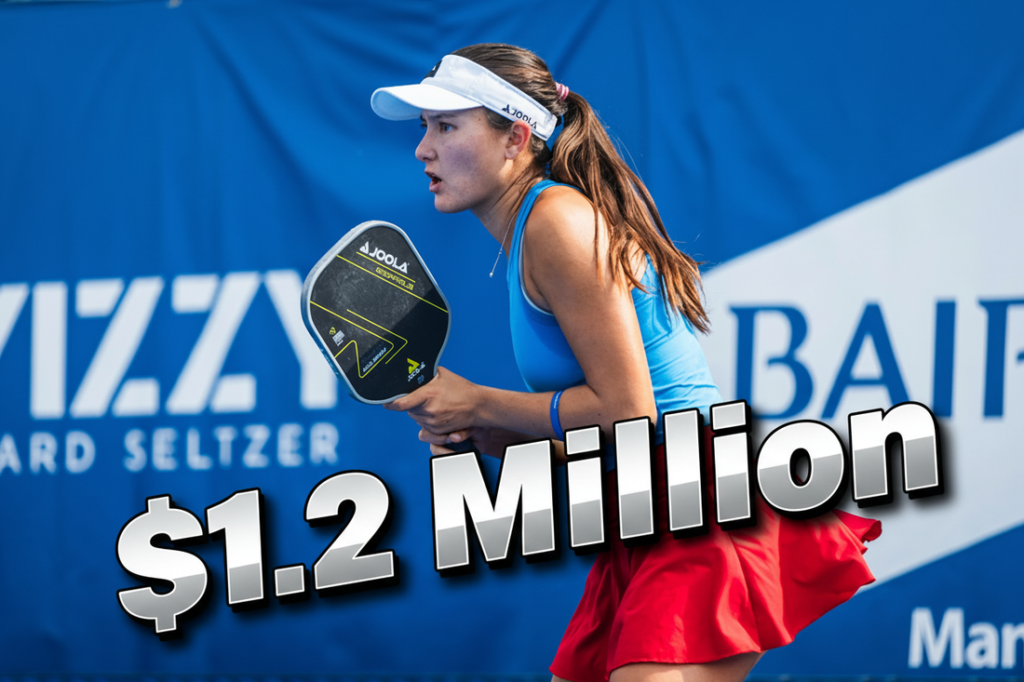

Meta Description: Discover how Anna Bright pickleball fans see her game: from Berkeley tennis to the PPA Tour, plus her style, gear, and lessons for your own play.
Anna Bright Pickleball: How a Berkeley Tennis Standout Became One of the Sport’s Smartest Doubles Players
Every sport has a few athletes who make the game look calmer than it really is. In pro pickleball, where rallies can turn into blurred hand battles at the kitchen line in a heartbeat, Anna Bright is one of those players. She rarely looks rushed, she rarely gifts away a cheap point, and she tends to win exchanges through patience and precision rather than raw fireworks. That combination has made anna bright pickleball content a staple for fans who want to understand what high-level doubles actually looks like when it is played cleanly.
This article is a full tour of her story and her game. You will find the background that shaped her, from college tennis to a corporate job she walked away from, along with a look at how she climbed the rankings, what makes her style so effective, which equipment she uses, and how she shares her knowledge with the community. More importantly, you will find practical takeaways you can apply at your local courts, whether you play in a weekly round robin or chase medals at regional tournaments.
A quick note on the numbers before we begin. Rankings, partnerships, and title counts in professional pickleball change constantly, so the figures mentioned here reflect what was publicly listed around the time of writing. Treat them as a snapshot rather than a final verdict, and check the official tour pages for the latest standings. With that settled, let us start with who she is and why so many players keep her name close when they talk about the future of the sport.
Who Anna Bright Is and Why Fans Pay Attention
Anna Bright is a professional pickleball player who competes on the PPA Tour in women’s doubles and mixed doubles, and she also plays in Major League Pickleball. The tour lists her as the world number two on the women’s side, with a career total of thirty-nine titles. Those are the kind of numbers that put a player in the conversation for the sport’s elite, and they come from years of steady, repeatable results rather than a single hot streak. In a game where momentum can swing wildly, consistency like that is the real prize.
What makes her interesting to casual fans is that she does not fit the stereotype of a power-first athlete. Her reputation is built on shot selection, patience, and an ability to read the next ball before it arrives. Watch a few of her matches and you will notice how often she wins points by forcing opponents to hit a slightly harder shot than they wanted, then punishing the small mistake that follows. It is a thinking player’s brand of pickleball, and it is a big reason her matches are so instructive to watch.
There is also a relatable quality to her story. She did not grow up as a pickleball prodigy, and she did not begin her professional life as a full-time athlete. She found the sport relatively late, made a calculated career change, and then proved the gamble right through hard work. For recreational players who started playing in their twenties or thirties and wonder whether they can still improve, her path offers a refreshing dose of encouragement.

From Texas Roots to Berkeley Tennis
Public player records list her birthplace as Grapevine, Texas, which places her origins in the Dallas–Fort Worth area, a region known for producing plenty of competitive racket-sport athletes. Like many pro pickleball players, she grew up with a tennis background, and that foundation shaped nearly everything about how she moves, hits, and thinks on court. Tennis teaches early lessons about footwork, balance, and patience, and those lessons transfer neatly into the dinking battles that define modern pickleball.
Her tennis résumé is the part of her biography that fans love to repeat. She played for the women’s varsity tennis team at UC Berkeley and reached a career-high national ranking of number thirteen. Competing at that level means years of structured training, tough matches, and a deep familiarity with pressure. Players who survive Division I tennis learn how to compete when tired, how to reset after a bad point, and how to stay composed when a match is slipping away.
Those habits are visible in her pickleball game today. A tennis player at that level builds an instinct for spacing, and understands how the geometry of a court shapes every decision. When she angles a roll volley or picks a spot for a reset, there is a logic behind it that goes beyond feel. As one longtime coach likes to say, “Tennis gives you the map, pickleball asks you to read it in a phone booth.” Her ability to read that smaller map so quickly is a direct result of her competitive tennis years.
The Leap From a Desk Job to the Pro Tour
After college, she did not immediately become a full-time pro. She worked as an account manager at DUPR, the company behind a widely used pickleball rating system, before deciding to leave her full-time position and commit to playing. That detail is one of the most inspiring parts of her story, because it shows a calculated career pivot rather than an impulsive jump. Working inside the sport’s rating ecosystem gave her a front-row view of how competitive pickleball was evolving.
Leaving a stable job for a sport that was still building its professional infrastructure took real nerve. Prize money, sponsorships, and tour contracts were growing quickly, but nothing was guaranteed. The decision rested on a belief that her skills could compete at the highest level, and that belief had to be strong enough to outweigh the comfort of a steady paycheck. Plenty of people dream about such a move; far fewer actually make it.
The lesson for everyday players is not that you should quit your job. It is that commitment matters. Her improvement did not come from casual weekend play, it came from treating pickleball as a craft worth studying and practicing with intention. If you want to level up, the habits she adopted are accessible to anyone: schedule focused practice, play against better opponents, and review your matches honestly. The scale of the commitment may differ, but the principle is identical.
A Pro Debut That Set the Tone
Her professional journey started quickly. According to the U.S. pickleball player directory, she began playing the sport in 2021, and one of her career highlights is winning the Punta Gorda APP event in February 2022 in both singles and doubles, partnering with Jorja Johnson, in her very first pro appearance. Winning two divisions in a pro debut is the type of result that makes the community sit up and take notice, especially from a player who had been in the sport for only about a year.
That early success mattered for more than the trophies. It confirmed that her tennis foundation translated well, and it gave her confidence to pursue the tour at a higher level. Early wins also tend to attract sponsors, media coverage, and the attention of teammates and rivals. Suddenly, the quiet newcomer from the rating company was a name every tournament director and fan was learning.
Looking back, that debut works as a thesis statement for her career. She showed an ability to adapt fast, to handle pressure in unfamiliar circumstances, and to play a style that holds up across formats. Singles and doubles demand different skills, and winning both in one event hints at the versatility that later made her so dependable in the doubles divisions that now define her résumé.
Major League Pickleball and the Ranchers Chapter
Before she became a fixture on the PPA Tour, she also made a mark in team competition. She was drafted into Major League Pickleball, won with the Ranchers, and was named co-MVP, which she lists among her career highlights. Team formats are a different animal from individual tournaments, because they require you to perform for teammates, handle rotating partners, and manage momentum across multiple matches in a single event.
Playing on a team also sharpens soft skills. You learn how to communicate under pressure, how to encourage a partner who is struggling, and how to reset the emotional temperature of a match. These abilities show up later in tour play, where doubles chemistry often decides tight matches. A player who has experienced the energy of a team event brings a different kind of leadership to every partnership.
Her current team page lists her with the St. Louis Shock, which reflects how rosters in the league shift from season to season. That movement is part of the charm of team pickleball, since it keeps storylines fresh and gives fans new matchups to debate. For anyone following anna bright pickleball highlights, the league side of her career adds extra texture to a résumé that already looks impressive on the individual tour.
Climbing the PPA Rankings
Climbing the professional rankings in pickleball is a grind that rewards consistency more than flash. Points accumulate over many events, and a player who keeps reaching semifinals and finals will steadily outrank someone who wins occasionally but exits early often. In an earlier snapshot from the tour’s player page, she was listed fourth in women’s doubles and third in mixed doubles. Since then, she has climbed to the world number two position, which suggests a steady upward trajectory.
The numbers behind those rankings tell a story of reliability. Her page lists a long run of finals and semifinal appearances, and the tour reports thirty-eight finals and thirty semifinals alongside her thirty-nine titles. Reaching that many late rounds takes more than talent. It requires fitness, mental toughness, and a game plan flexible enough to work against many different opponents, from fast hand-speed players to big-hitting power players.
For readers who want a broader view, think of the ranking climb as a series of small upgrades rather than a dramatic leap. Each season brings tiny improvements in shot selection, endurance, and tactical awareness. Over time, those small gains compound, and a very good player becomes a great one. It is a useful reminder that improvement in pickleball, at any level, is usually built from boring habits repeated well.
Career Snapshot at a Glance
Because her résumé spans tennis, team play, and multiple tour divisions, it helps to see the key details in one place. The table below summarizes publicly listed information, and you should treat the ranking and title figures as time-sensitive, since they change as the season unfolds.
| Category | Detail |
|---|---|
| College background | UC Berkeley women’s varsity tennis, career-high national ranking of thirteen |
| Previous career | Account manager at DUPR before turning to pickleball full time |
| Started pickleball | 2021 |
| Turned pro | 2022 |
| Pro debut highlight | Won singles and doubles at the Punta Gorda APP event |
| Team play | Drafted by Major League Pickleball, won with the Ranchers, co-MVP; now listed with the St. Louis Shock |
| Main divisions | Women’s doubles and mixed doubles on the PPA Tour |
| Listed world ranking | Number two among women |
| Career titles listed | Thirty-nine |
| Primary sponsor | JOOLA |
| Home base | South Florida |
A table like this is useful because it shows how neatly each chapter of her life connects to the next. The college tennis ranking points to technical skill, the corporate job explains her understanding of the sport’s structure, and the early pro wins show how quickly she adapted. When you put the pieces together, the rise looks less like luck and more like a plan carried out with discipline.
Playing Style: Fast Hands, Consistency, and Anticipation
Her official player bio credits her success to fast hands, consistency, and strong anticipation, and it jokingly adds a Hannah Montana pump-up playlist to the list. Those first three qualities are the engine of her game. Fast hands allow her to win exchanges at the kitchen line, where reaction time is everything. Consistency keeps her from handing opponents free points. Anticipation lets her move a half-step early, which makes difficult balls look routine.
Watch how she plays a typical rally and you will see these strengths working together. She tends to keep the ball low, mix pace and direction, and wait for a loose reply before accelerating. She does not rush to attack every ball, which is a trap many recreational players fall into. Instead, she builds points patiently, using resets, dinks, and controlled counters until an opening appears. When it does, she attacks with precision rather than reckless power.
That style also travels well across partners and opponents. Because it relies on skill and judgment rather than one dominant weapon, it is hard to scout and hard to disrupt. Opponents cannot simply serve up a big hitter’s pace and hope to win. They have to out-think her, which is a much harder task. As a veteran coach might put it, “The player who makes fewer bad decisions usually wins the day, no matter how pretty the highlight reel looks.”
The Tennis-to-Pickleball Advantage and Its Limits
Many of the sport’s top professionals started in tennis, and it is easy to see why. Tennis builds elite hand-eye coordination, footwork, and tactical instincts, all of which carry over to pickleball. The transition is not automatic, though. Pickleball is played on a smaller court, with a slower ball and a no-volley zone that changes how points are built, so even excellent tennis players must relearn spacing and touch.
What stands out about her approach is how fully she embraced those differences. Instead of trying to play tennis on a smaller court, she adapted her instincts to the kitchen-centered style of modern doubles. That means mastering the drop, the reset, and the quick hand battle, shots that tennis rarely demands in the same way. Adaptation is the quiet superpower of crossover athletes, and she displays it every time she steps on court.
For recreational players with a tennis background, her example is a useful guide. Do not assume your old skills will carry you automatically. Respect the sport’s unique rhythms, and spend real time on the third shot drop and the dink exchange. For players without a racket-sport background, her story is equally encouraging, because it shows that smart habits and good decisions can narrow the gap faster than most people expect.
Doubles Partnerships and Mixed Doubles Chemistry
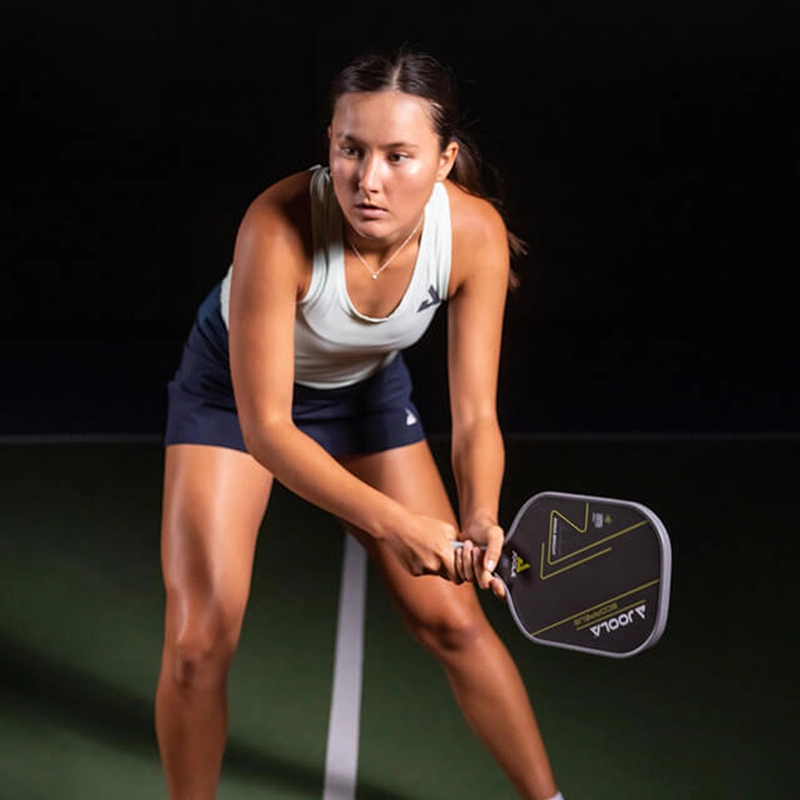
Doubles success depends heavily on chemistry, and her results show a talent for adapting to different partners. Match records from 2026 show her teaming with Anna Leigh Waters in women’s doubles at the Newport Beach Open, and pairing with Hayden Patriquin in mixed doubles at the same event. Switching between partners with different styles requires flexibility, since each pairing has its own rhythm, communication habits, and tactical preferences.
Good partnerships rely on clear roles. One player might handle the forehand side and the other might cover more middle balls, or one might focus on aggressive poaching while the other anchors the defense. Communication matters too, because a single misunderstanding at the kitchen can lose a point. The best pairs develop a shared shorthand, often using quick calls, simple signals, and consistent habits that remove guesswork during fast exchanges.
Away from the court, her personal life intersects with the sport as well. A 2024 press release from a Florida indoor pickleball operator described her and fellow pro James Ignatowich as a power couple during an announced clinic and exhibition visit. Sharing a life with another top player naturally brings advantages, such as constant practice partners and a deep shared understanding of the grind. It also gives fans a fun storyline to follow across the season.
The Mindset: Hating Free Points
Beyond technique, her mental approach is a major reason for her consistency. In a widely shared interview about her keys to success, she described being defined in both tennis and pickleball by a strong dislike of loose errors and of handing opponents unearned points. That philosophy sounds simple, but it shapes everything from shot choice to risk management. Every unforced error is a gift, and she appears determined to give very few of them.
This mindset has practical consequences. It encourages playing the high-percentage shot, even when a flashier option is available. It also pushes a player to prepare thoroughly, because errors often come from rushed footwork or poor positioning. When you commit to avoiding free points, you naturally become more disciplined about your split step, your paddle prep, and your target selection.
Recreational players can borrow this idea immediately. Next time you play, track how many points end on your own errors versus your opponent’s winners. Most people are surprised to find that a majority of points are lost, not won. Shifting your focus from hitting winners to avoiding giveaways is one of the fastest ways to climb the ratings ladder, and it is exactly the sort of lesson that anna bright pickleball fans love to highlight.
Gear: JOOLA Paddles and Signature Equipment
Equipment is a popular topic among pickleball fans, and her setup draws plenty of curiosity. She is sponsored by JOOLA, and the tour lists a paddle line bearing her name, including the Scorpeus models. Signature paddles are designed with input from the athlete, balancing power, control, spin, and feel, and fans often buy them to chase a similar playing experience at home.
It is worth being realistic about gear, however. A signature paddle will not hand you professional-level hands, and the best paddle is the one that matches your style and comfort. Players who prefer control and touch tend to enjoy slightly thicker cores and larger sweet spots, while those who like to attack often favor paddles with a bit more pop. Before buying, try demo paddles when possible, and pay attention to weight, grip size, and how the face feels on drops and resets.
Equipment also changes over time. Professionals frequently adjust their setups as new models arrive, and sponsorship details can shift between seasons. If gear is on your mind, check current product listings and official announcements for the latest information. In the meantime, remember that a dependable third shot drop and disciplined footwork will improve your results far more than any new frame ever could.
Brighter Pickleball: Newsletter, YouTube, and Community Content
Her influence extends beyond match results. She runs a weekly newsletter called Brighter Pickleball, which covers pro tournaments, her thoughts on relevant news, and the occasional tip to help readers improve their games. She also maintains a YouTube presence, where she shares perspectives that come from someone actually playing at the top of the sport. That insider angle is valuable, because fans get commentary from a player who knows what the pressure feels like.
Her content has also covered which players have impressed her in 2026, and it shows how closely she follows the wider tour. Players who study the sport as passionately as they play it often develop sharper tactical instincts, because they are constantly absorbing patterns from other matches. It also signals a generous, community-minded attitude, since sharing analysis helps newer fans understand why certain players succeed.
For aspiring players, following professional content creators is a surprisingly effective way to improve. Reading a breakdown of a match teaches you to notice things you might miss when watching casually, such as positioning, shot selection, and how teams adjust mid-match. Pair that learning with regular on-court practice, and you will start to see the game with a clearer, more tactical eye.
Life in South Florida and the Training Environment
She resides in South Florida, and her bio notes that she feels fortunate to practice there with other skilled players on a regular basis. Training environment matters enormously in pickleball. Being surrounded by high-level players means better practice sessions, tougher games, and constant exposure to new ideas. South Florida has become a hub for touring professionals, which makes it a natural home base.
A strong training group pushes everyone to improve. When you practice against players who punish weak shots, you learn quickly which parts of your game need work. It also keeps motivation high, since the daily environment is competitive and encouraging at the same time. The effect compounds over months and years, helping players maintain the sharpness needed for the tour’s demanding schedule.
You do not need to move to Florida to benefit from this idea. Seek out the strongest group available in your area, whether that is a club ladder, a competitive open play session, or a clinic. Playing slightly above your level is uncomfortable but productive, and it accelerates learning in ways that easy games never can. The goal is to create your own version of a high-quality training environment.
What Recreational Players Can Steal From Her Game
There is plenty to borrow from her style without needing pro-level athleticism. The first lesson is patience. Many club players try to end points too early, hitting aggressive shots from poor positions. Learning to wait for a truly attackable ball, and to reset when pressured, will win more points than any highlight-reel swing. Patience is not passive, it is a strategy that forces opponents to make mistakes.
The second lesson is footwork. Fast hands only matter if you are in the right place to use them. Practice a consistent split step as your opponent strikes the ball, and focus on moving as a unit with your partner. Small positioning improvements often unlock big gains in consistency, because balls that were once rushed suddenly become manageable. Good footwork is the invisible foundation behind almost every smooth-looking rally.
The third lesson is target discipline. Instead of simply hitting the ball back, pick specific targets such as the opponent’s feet, the middle seam, or the backhand side. Deliberate placement turns routine shots into pressure. If you adopt even one of these habits, your matches will feel different within a few weeks. Studying how anna bright pickleball matches unfold is a helpful way to see these principles applied at the highest level.
Practice Routines Inspired by Her Approach
Building a practice plan around her priorities is straightforward. Start with consistency drills, such as cross-court dinking sessions where the goal is to keep the ball low and in play for as many exchanges as possible. Set a target like thirty uninterrupted dinks, and gradually push beyond it. This trains the control and patience that underpin a low-error style, and it translates directly into match situations.
Next, devote time to resets and hand battles. Have a partner feed fast balls at your feet or chest from the kitchen line while you practice blocking them softly into the opposite kitchen. This builds the quick hands needed to survive pressure. Mix in transition drills, where you practice moving from the baseline to the kitchen while handling a third shot drop, since that is the most important sequence in modern doubles.
Finally, include match play with a purpose. Before each game, choose one theme, such as eliminating unforced errors or targeting the middle. Afterward, review how well you executed it. This approach turns ordinary games into deliberate practice and keeps you focused on process instead of just the score. Over a few months, steady, intentional practice like this can produce more improvement than random play ever will.
Watching Pro Pickleball: How to Follow Her Matches
Following the pro tour is easier than ever, with many events broadcast or streamed online. The best way to follow her is to check the official tour schedule and watch for events in women’s and mixed doubles. Her player pages list upcoming tournaments, and match results appear shortly after each round, which makes it simple to keep up even if you cannot watch live.
When you watch, try focusing on specific skills instead of just the score. Pay attention to how she positions at the kitchen, how she handles the transition zone, and which shots she chooses on the third ball. Slow-motion replays on streaming platforms can help you see the details of her footwork and paddle preparation. Over time, you will start to notice patterns, such as when she chooses to speed up or reset.
Social media and newsletters offer another layer of insight. Pros often share behind-the-scenes content, tournament recaps, and training notes, which add context to the matches. Combine that content with live viewing, and you will get a richer sense of how the sport is evolving. Watching with intention transforms entertainment into education, and it makes the next trip to your local court far more productive.
Her Place in the Sport’s Younger Generation
Pro pickleball is trending younger, and fans often discuss how a new wave of athletes is raising the bar on speed and power. Bright sits in an interesting spot within that conversation. She is still young by most standards, yet she has years of tour experience and a well-rounded game. That blend allows her to compete with rising stars while drawing on lessons from earlier seasons.
The sport’s growth has also created a more professional environment, with better sponsorships, stronger media coverage, and clearer career paths. Athletes who entered when the tour was still forming now serve as bridges between the early days and the current era. Her decision to leave a corporate job for the tour is a good example of how the sport has matured into a viable profession.
Looking ahead, it is reasonable to expect continued competition at the top of the women’s game, with several elite players trading wins from event to event. That rivalry is good for the sport, because it pushes everyone to improve. For fans, it means more compelling matches and storylines to follow, and for aspiring players, it means more role models whose games are worth studying closely.
Common Misconceptions About Pro Pickleball Players
One common misconception is that pro players win simply because they hit harder. In truth, power is only one piece of the puzzle. The best players win through placement, patience, and decision-making. A hard shot into the wrong spot will come back faster, while a soft shot to the right place can win the point outright. Watching players like her makes it clear that touch and tactics matter just as much as strength.
Another myth is that you must have started young to reach the top. Her story partly disproves that idea, since she discovered the sport in 2021 and turned pro in 2022. She did bring years of high-level tennis experience, so the lesson is nuanced. Prior athletic training helps enormously, but it is also proof that adults can reach elite levels by committing fully and training intelligently.
A third misconception is that equipment alone drives success. Fans sometimes assume that buying a signature paddle will transform their game overnight. As we covered earlier, gear is a tool, not a shortcut. Technique, fitness, and strategy are the real drivers of improvement. If you want to play like a pro, copy the habits, not just the paddle, and you will see far better returns on your time and money.
Conclusion
Her journey is a compelling blend of talent, timing, and thoughtful decision-making. She moved from Texas to Berkeley’s tennis courts, built a corporate career inside the pickleball ecosystem, and then bet on herself by turning pro. The results speak for themselves: a world number two ranking, dozens of titles, team success in Major League Pickleball, and a growing role as a teacher and commentator for the community.
For players and fans alike, the broader takeaway is that clean, disciplined pickleball wins. Avoid free points, stay patient, prepare your feet, and choose your targets with purpose. Whether you are a beginner learning the rules or a seasoned tournament player chasing a higher rating, the lessons embedded in anna bright pickleball matches are practical and immediately usable. Watch closely, practice deliberately, and enjoy the process, because the best improvement usually comes from steady habits rather than dramatic breakthroughs.
Frequently Asked Questions
Who is Anna Bright in professional pickleball?
She is a professional player on the PPA Tour who competes in women’s doubles and mixed doubles, and she also plays in Major League Pickleball. Before pickleball, she played varsity tennis at UC Berkeley and worked at DUPR. Her reputation rests on consistency, quick hands, and smart shot selection, which have helped her reach the top of the women’s rankings.
What is Anna Bright’s background before pickleball?
She grew up playing tennis and competed for UC Berkeley, where she reached a career-high national ranking of thirteen. After college, she worked as an account manager at DUPR, the rating company, before leaving her full-time job to pursue the tour. That mix of athletic training and industry experience gives anna bright pickleball fans a useful lens for understanding her career.
What paddle does Anna Bright use?
She is sponsored by JOOLA, and the tour lists a signature paddle line under her name, including the Scorpeus models. Professional equipment choices can change from season to season, so it is smart to check official product pages for the current model. Keep in mind that any paddle should match your own style, grip preference, and comfort rather than simply copying a pro.
How can I learn from Anna Bright’s game?
Focus on the habits that define her style: patience at the kitchen, low-error shot selection, and good anticipation. Watch her matches with attention to footwork and positioning, and consider following her newsletter and YouTube content for tactical insight. Applying a few of these ideas in your own practice, such as targeting the middle and avoiding unforced errors, can quickly improve your results.
Where can I follow Anna Bright pickleball results and schedule?
The official PPA Tour player page lists her rankings, titles, and upcoming events, and Major League Pickleball maintains a separate team profile. Many matches are streamed online, and recaps appear on pickleball news sites and social media. Because rankings and schedules change frequently, checking those official sources is the best way to stay current on anna bright pickleball news.
Did Anna Bright start playing pickleball as a child?
No. Public player records indicate she began playing pickleball in 2021 and turned pro in 2022, after a strong college tennis career. Her fast rise shows how well racket-sport skills can transfer, though it also reflects serious dedication. Her story is encouraging for adults who discover the sport later and wonder whether meaningful improvement is still possible.


