Meta description: Need help with blooket login join? Learn how to sign in, enter a game code, fix common errors, and make the most of every Blooket game.
Blooket Login Join: The Complete Guide to Signing In, Entering Game Codes, and Playing Smarter
If you have ever watched a classroom go from sleepy to roaring in about thirty seconds, there is a good chance a Blooket game was involved. The platform turns quizzes into fast, colorful, slightly chaotic games, and students love it. The catch is that newcomers sometimes get stuck right at the front door. They are not sure whether they need an account, which website to visit, or where to type the code their teacher just wrote on the board. That is exactly where a clear blooket login join walkthrough comes in handy.
This guide covers everything in one place: how to create an account and sign in, how to join a live game as a player, what to do when something goes wrong, and how teachers can host smoothly. It also explores the game modes, safety habits, and a few small tricks that make the experience better for everyone. Whether you are a student, a parent, or a teacher trying the tool for the first time, you will find practical, plain-language advice below.
What Blooket Is and Why So Many Classrooms Use It
Blooket is a web-based learning game platform where teachers or students build question sets and then run them as games. Instead of a plain quiz that ends with a score, players answer questions to earn coins, fight off enemies, dig for treasure, or race against classmates. The questions are the engine, and the game mode is the paint job. That combination keeps students answering repeatedly because the next round always feels one answer away from a big payoff.
The appeal for teachers is just as strong. Setting up a review session takes minutes, there are millions of ready-made question sets to borrow, and the games work on laptops, tablets, and phones without any installation. Understanding the basic blooket login join flow is the first step to unlocking all of that, because every other feature sits behind two simple actions: signing in if you are hosting or building, and entering a code if you are playing.
Understanding the Difference Between Logging In and Joining a Game
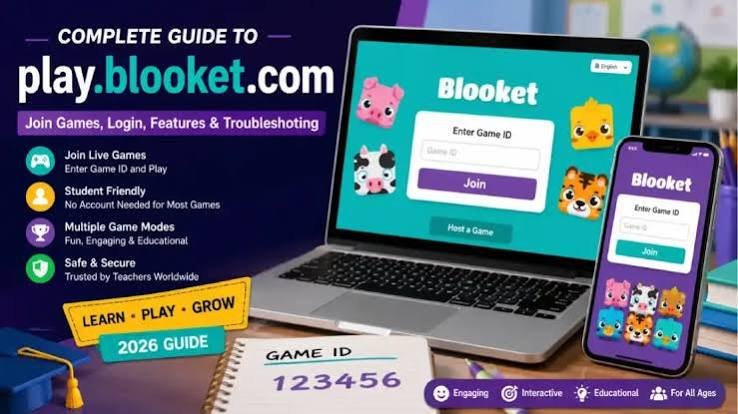
Many first-time users assume they must create an account just to play, but that is not usually the case. Players who are joining a live game typically only need a game code and a nickname. An account is mainly useful for hosts, for people who want to save progress, and for anyone who wants to build, favorite, or edit question sets. Knowing which path you need saves a lot of confusion.
Think of it like a movie theater. Anyone with a ticket, which here is the game code, can walk in and enjoy the show. Logging in is more like being a member of the theater: you get a profile, a collection of saved items, and the ability to put on your own screening. The phrase blooket login join sometimes gets treated as a single step, but in practice it describes two separate doors, and choosing the right one makes everything faster.
How to Create a Blooket Account
Creating an account is straightforward. Start by opening the official Blooket website in your browser and finding the sign-up option. You will usually be able to register with an email address and password, or use a connected account from a major provider, depending on what the site offers at the time. Choose a username you would be comfortable having your teacher or classmates see, because it can appear in lobbies and on leaderboards.
After you submit your details, you may be asked to confirm your email or complete a short profile. Take a minute to select an avatar, often called a blook, and review the account settings. Teachers should pay attention to the role options, since hosting tools are the main reason educators create accounts. Students under the age required by the platform’s terms should follow the rules their school or parent has set, which sometimes means using a school-approved sign-in method.
Step-by-Step Blooket Login on a Computer
Signing back in is easy once your account exists. Open your browser and go to the official Blooket website, then select the login option from the top of the page. Enter the email or username you registered with, type your password carefully, and submit. If you chose to sign up through a connected provider, use that same provider again rather than typing a password. After a successful sign-in, you land on your dashboard, where your sets, favorites, and recent activity are waiting.
A few small habits prevent headaches. Use a password manager or a memorable passphrase so you do not have to guess after a long break. Avoid logging in on shared computers without signing out afterward, especially in school labs. If you plan to host often, bookmark the login page so you can return in a single click. This simple routine makes the whole blooket login join process feel almost automatic after the first week.
Logging In on a Phone or Tablet
Blooket works well in a mobile browser, which makes it flexible for students who do not have laptops. Open your phone’s browser, visit the official site, and use the login option just as you would on a computer. The layout adapts to smaller screens, so buttons and menus are larger and easier to tap. If your device offers to save your password, you can accept, as long as the phone is personal and protected by a lock screen.
Mobile play has a few quirks worth knowing. A weak connection can interrupt a game, so try to stay within strong Wi-Fi range. Rotating your screen to landscape often gives you more room for answer buttons in certain modes. Closing extra apps and tabs helps the page run smoothly, particularly on older devices. These small adjustments keep the experience fun and prevent the dreaded freeze right before a big round.
How to Join a Blooket Game with a Code
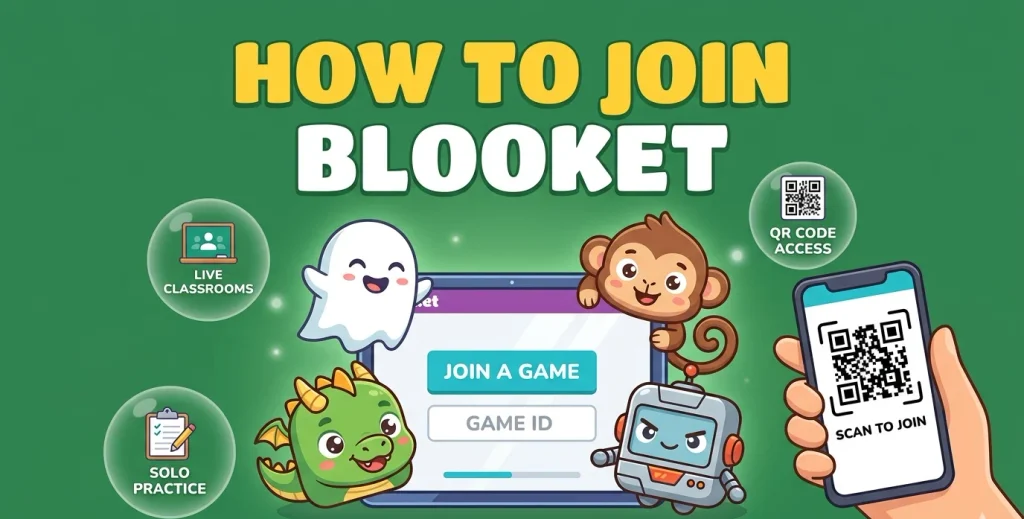
Joining a live game is the part most students care about, and it takes seconds. Your teacher or host will share a numeric game code, usually projected on a screen or written on a board. Open the official join page in your browser, type the code into the box, and press the join button. If the code is valid and the game is open, you will be asked to enter a nickname and then you will drop into the lobby alongside everyone else.
Choose your nickname thoughtfully. Many teachers require real first names or school-appropriate handles, and inappropriate names can get you removed from the game. Once you are in the lobby, wait for the host to start. If you mistype the code or the game has not been opened yet, the page will usually tell you so, and you can simply try again. Mastering this quick blooket login join habit means you will never miss the opening question.
A Handy Comparison of Common Blooket Game Modes
Part of the fun of Blooket is the variety. The same set of questions can feel completely different depending on the mode your host selects. The table below summarizes several popular modes and what players can expect from each, which helps students prepare and teachers choose the right fit for their lesson.
| Game Mode | Play Style | Best For | Vibe |
|---|---|---|---|
| Classic | Answer questions to earn points | Quick review sessions | Straightforward and fast |
| Gold Quest | Collect gold and swap with others | Competitive classes | Lively, unpredictable |
| Tower Defense | Answer to build defenses | Strategy lovers | Focused and tactical |
| Cafe | Serve customers by answering | Solo or small groups | Relaxed and steady |
| Factory | Build a production line | Long practice sessions | Resource-management fun |
| Racing | Race by answering correctly | Short, energetic bursts | Speedy and loud |
| Battle Royale | Survive as a group is eliminated | Larger groups | Dramatic and intense |
Mode availability can change as the platform updates, so teachers should check the options on their dashboard before class. The point is that the learning content stays the same while the experience shifts, which keeps repeated reviews from feeling stale. Matching the mode to the group’s energy level is one of the easiest ways to improve engagement.
Tips for Teachers Hosting a Live Game
Hosting begins after you log in and choose a question set. You can build your own, duplicate one that already exists, or browse the library for something related to your subject. Select the set, pick a mode, adjust settings such as time limits or the number of players, and launch the game. The platform will generate a code that you share with students. Display it clearly, because a hard-to-read code is the most common reason students stumble at the start.
A little preparation goes a long way. Test your set before class to catch typos or confusing answer choices. Decide in advance whether students can join with free nicknames or must use their real names. Keep the lobby open long enough for latecomers but not so long that the lesson drags. The late educator John Dewey is often credited with saying that education is not preparation for life but life itself, and a well-run game is a nice reminder that learning can feel active, social, and alive.
Solo Play, Homework Mode, and Flexible Assignments
Blooket is not limited to live sessions. Teachers can assign games for students to complete on their own time, which works well for homework, absent students, or extra practice. In these cases, students typically use a link or code provided by the teacher, sign in if required, and play at their own pace. Results can then be reviewed, giving educators a snapshot of which questions caused trouble.
For students, solo play is also a chance to practice without pressure. You can replay a set several times, notice which questions trip you up, and improve before the next class review. If your teacher assigns a deadline, make sure you finish before it passes, and keep an eye out for any instructions about whether a login is required. Once you understand how blooket login join steps apply to both live and assigned play, switching between them becomes painless.
Troubleshooting Common Login and Join Problems
Even a simple platform has the occasional hiccup. The table below lists frequent issues, what usually causes them, and a practical fix. Try the easy solutions first, because most problems come down to typos, outdated browsers, or connection hiccups.
| Problem | Likely Cause | Quick Fix |
|---|---|---|
| Game code not accepted | Typo, expired code, or game not started | Recheck the digits and ask the host to confirm the game is live |
| Cannot sign in | Wrong password or email | Use the password reset option and check for typing errors |
| Page will not load | Weak connection or blocked site | Switch networks or ask the school about network filters |
| Kicked from a game | Inappropriate nickname or host removal | Rejoin with a school-appropriate name |
| Lag or freezing | Too many open tabs or old browser | Close extra tabs and update the browser |
| Missing question sets | Signed into a different account | Log out and sign in with the correct account |
If none of those solutions help, try clearing your browser cache or testing in a different browser. School networks sometimes restrict certain sites, so a teacher or IT administrator may need to allow access. Patience matters here, because rushing often leads to repeated typos. A calm, methodical check usually solves the issue in under a minute.
Account Safety and Privacy Habits
Any account-based platform deserves basic security care. Choose a strong password that you do not reuse elsewhere, and never share it with classmates, even friends. If you suspect someone else has used your account, change your password immediately and notify your teacher or a parent. Be careful about links that claim to offer free upgrades, hacks, or special items, because these are a common way scammers try to steal login details.
Students should also remember that anything typed as a nickname or shared in a lobby can be seen by others. Stick with respectful names and avoid sharing personal information such as home addresses or phone numbers. Fred Rogers once observed that play is really the work of childhood, and a safe digital play space depends on everyone treating it with the same care they would give a classroom. Good habits protect both the individual and the community.
Using Blooket Responsibly in the Classroom
A game is only valuable if it supports learning. Teachers get the best results when the questions align with lesson goals and when the competitive element does not overshadow understanding. Rotating game modes, mixing in team play, and spending a few minutes discussing missed questions afterward turns a fun session into genuine review. Students remember concepts better when they talk about why an answer was right, not just that they got a point.
It is also wise to set expectations around behavior. Remind students that cheating tools and exploits violate the spirit of the activity and can get accounts removed. Encourage them to celebrate classmates who improve rather than only those who win. When everyone understands that the goal is mastery, the energy of the game becomes a tool rather than a distraction, and the blooket login join routine becomes just the doorway into a productive lesson.
Building Your Own Question Sets
Creating a set is one of the most rewarding features for logged-in users. After signing in, choose the option to make a new set, give it a clear title, and start adding questions. Each entry needs a prompt, a correct answer, and a few plausible wrong answers. Keep the wording concise, avoid trick phrasing, and double-check spelling, since small errors can confuse players and slow the game.
Quality beats quantity. A set of fifteen well-crafted questions often works better than a sprawling list of fifty rushed ones. Consider adding images where they clarify a concept, and vary the difficulty so that every student has a chance to shine. Once your set is published, you can reuse it year after year, improving it each time based on how students performed.
Study Strategies for Students Using Blooket
Students can use the platform as more than a classroom activity. Replay sets before tests to reinforce key facts, and pay attention to the questions you consistently miss. Making a list of those trouble spots and reviewing them separately is a smart way to turn a game into a study plan. You can even build a personal set from your notes, forcing yourself to rephrase information as questions.
Playing with friends can also boost retention, as long as the group stays focused. Explain answers to each other after the game ends, since teaching a concept is one of the best ways to learn it. Short, frequent sessions tend to work better than one long marathon, so try fifteen minutes of focused play a few times a week. Over time, those small habits add up to stronger recall.
Conclusion
Blooket succeeds because it makes review feel like play, and the path into that experience is refreshingly simple. Players need only a game code and a nickname, while hosts and creators benefit from an account that stores their sets and unlocks the full toolkit. Understanding the difference between signing in and entering a code removes most of the confusion that new users face.
With the steps, tables, and tips above, you are ready to handle everything from creating an account to troubleshooting a stubborn error. Keep your password safe, choose appropriate nicknames, and match the game mode to your goals. Do that, and every blooket login join attempt will feel smooth, leaving you free to focus on what matters most: learning, laughing, and maybe winning a round or two.
Frequently Asked Questions
Do I need an account to use blooket login join features?
Not always. Players joining a live game generally need only a valid game code and a nickname. An account becomes important if you want to host games, create question sets, or keep track of your own progress. Teachers and frequent creators will almost certainly want to sign in.
Where do I enter a Blooket game code?
Open the official join page in your browser, type the numeric code your host shared, and select the join button. After that, you will be asked for a nickname before entering the lobby. If the code does not work, confirm that the host has started the game and that you typed every digit correctly.
Why can’t I complete my blooket login join attempt?
The most common causes are a mistyped password, an incorrect game code, or a weak internet connection. Try the password reset option if you cannot sign in, and ask your host to verify the code if you cannot join. Clearing your browser cache or switching browsers can also solve stubborn issues.
Can I play Blooket on my phone?
Yes. The platform works through mobile browsers on both phones and tablets, so you can sign in or join a game without installing anything. A stable connection and an updated browser make the experience smoother, and landscape mode often gives you more room for answer buttons.
Is Blooket free to use?
The core experience of joining games and building basic sets is available without paying, though the platform may offer optional paid features. Because pricing and plans can change, check the official website for current details. Whether you stay on the free tier or upgrade, the steps for blooket login join remain the same.
What should I do if my nickname is rejected or I get removed from a game?
Hosts can remove players who use inappropriate or disruptive names, and the platform may filter certain words automatically. Choose a respectful, school-appropriate nickname, and rejoin using the same game code if the host allows it. If you believe you were removed by mistake, speak with your teacher or host directly.