
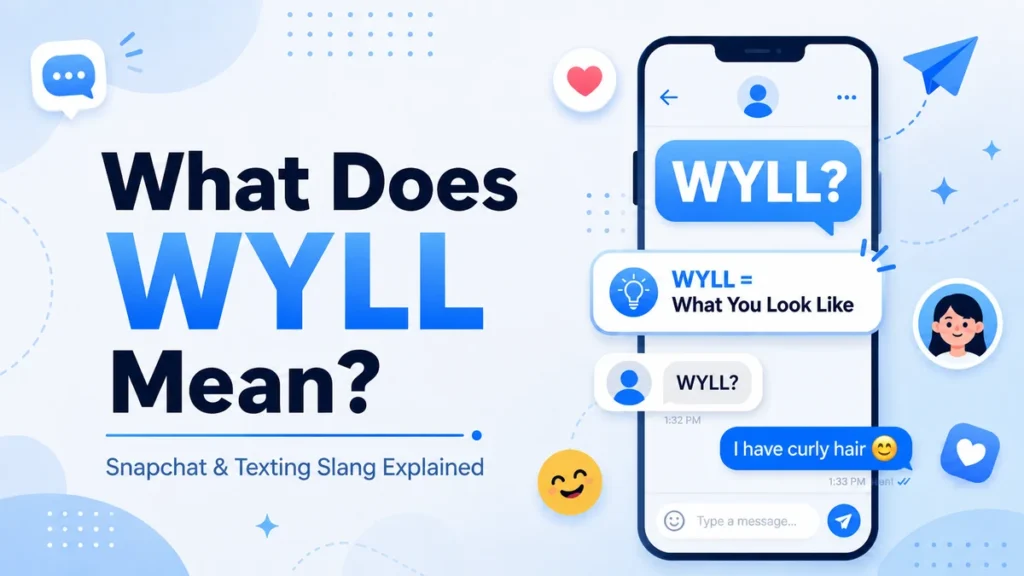

Wondering what does wyll mean in text? Here’s the real meaning, how to reply, when to be careful, and how to tell it apart from similar slang.
What Does WYLL Mean in Text? The Real Meaning, Origins, and Smart Ways to Reply
Every few months a new set of letters lands in your direct messages, and you are left staring at the screen trying to decide whether it is a joke, a compliment, or something you should ignore. WYLL is one of those strings. It looks like a typo, it sounds like a name, and it shows up most often in messages from people you barely know. If you have been wondering what does wyll mean in text, the short version is that in most modern conversations it is shorthand for “what you look like,” a quick way of asking someone to share a photo or describe their appearance. The longer version is more interesting, because the abbreviation carries a lot of social context that changes how you should respond.
This guide goes well beyond a one-line definition. You will find out where the abbreviation tends to appear, why so many websites give conflicting answers, how the meaning shifts from platform to platform, and what to say back when someone sends it to you. There is also a section on staying safe, because this particular slang term often arrives from strangers, and a little caution goes a long way. Everything is written in plain, friendly language so you can read it once and feel confident the next time those four letters pop up on your phone.
The Short Answer: What Does WYLL Mean in Text Today?
When you strip away the guesswork, the most widely reported meaning is “what you look like.” People use it as a compact version of the question “what do you look like?” and it appears most often in direct messages on apps such as Snapchat, Instagram, TikTok, and similar platforms. Someone sends it when they want a selfie, a description, or a general sense of your appearance, usually early in a conversation with someone they have not met in person. In that sense, the answer to what does wyll mean in text is closer to a request than a statement, and the sender is expecting you to reply with something visual or descriptive.
It helps to think of it the same way you would think of other short DM openers such as “asl” or “pic?” These phrases exist because typing is quick and attention is short, so people compress a full question into a handful of characters. The compression is also what makes it ambiguous. Four letters can be read in a few different ways, and without context a message that just says “wyll” could be a typo, an unfinished sentence, or a deliberate appearance question. Reading the surrounding conversation, the platform, and the relationship between you and the sender usually settles it within seconds.
Where the Abbreviation Comes From
Like most internet slang, WYLL does not have a tidy origin story with a date and an inventor. It grew out of the same habit that produced “brb,” “idk,” and “wyd,” where people shorten common questions into the first letter of each word. “What you look like” becomes W-Y-L-L, in the same way “what are you doing” became WYD. The extra L is simply the final word, “look,” followed by the trailing “like,” which gives the abbreviation its slightly odd, double-L ending. Because it spread through private messages rather than public posts, it never had a single viral moment, which is part of why its history is so fuzzy.
The abbreviation also benefits from the way teenagers and young adults treat slang as a living thing. Terms rise when a few popular accounts use them, drift across platforms, and then either settle into everyday use or fade away. WYLL appears to sit somewhere in the middle, familiar enough that many people recognize it but not so mainstream that it shows up in every dictionary of internet language. As the philosopher Ludwig Wittgenstein wrote, “The limits of my language mean the limits of my world.” Slang like this is a reminder that every community builds its own small vocabulary, and learning it is a way of stepping into that world.
Why Different Websites Give Different Answers
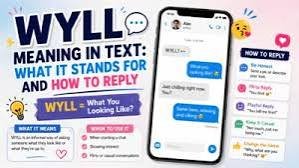
If you search around, you will quickly notice that explanations disagree with one another. Some pages say the abbreviation stands for “what you look like,” others claim it means “will you,” a few insist it stands for “what you’ll love,” and some describe it as a vague word of agreement or hesitation. This confusion is common with newer slang. Many sites publish quick explainers without checking how real people use the term, and they often copy from each other, which spreads the same shaky claims across dozens of pages. The result is a pile of answers that sound confident but cannot all be correct.
A practical way to cut through the noise is to look at how the term behaves in real conversations rather than how it is defined on a page. In actual direct messages, the version that appears again and again is the appearance question, typically sent by someone new to the chat. The “will you” reading looks more like an ordinary misspelling of “will” or “will you,” the kind of typo that happens when someone types quickly. When someone searches for what does wyll mean in text, the most dependable approach is to weigh how common each usage is in the wild and to check the context of your own message before deciding which meaning applies.
How People Use It on Different Platforms
On Snapchat, the abbreviation tends to show up as a first or second message from someone who added you recently. Snapchat leans on images, so a request for a picture feels natural there, and replies are often a quick selfie or a joking description. On Instagram, it usually appears in message requests, where people who do not follow each other can still make contact. In that setting it often comes across as more forward, since there is less shared history and the sender may be reaching out cold. TikTok comments and messages can follow a similar pattern, though the surrounding video content sometimes gives a clearer hint about what the person actually means.
In gaming chats and group servers, the picture is different. A short message in a voice or text channel may be nothing more than a quick question typed between matches, or it may be a reference to a game character, since “Wyll” is also the name of a popular companion character in the role-playing game Baldur’s Gate 3. That is a good example of why context is king. If the conversation is about quests, builds, or party members, the word is almost certainly about the character. If the message arrives in a private chat with someone you have never spoken to, the appearance reading is far more likely.
Meanings at a Glance
Because the same four letters can point in several directions, a quick comparison makes things easier. The table below sets out the interpretations you are most likely to run into, how common each one is, and the clues that usually help you tell them apart.
| Possible meaning | How likely it is | Where it usually appears | Clues to look for |
|---|---|---|---|
| What you look like | Most common | Direct messages on Snapchat, Instagram, TikTok | Sent by a new contact, often with no other context |
| Will you | Occasional | Fast typing in casual chats | Followed by a verb, such as “wyll you come” |
| What you’ll love | Rare | Playful or promotional captions | Used with a recommendation or a link |
| Character name | Situational | Gaming chats and fan communities | Surrounded by talk of quests, builds, or party members |
| Plain typo or old spelling | Occasional | Any chat | Appears in the middle of a normal sentence |
Treat the likelihood column as a guide, not a rule. Language online changes quickly, and a friend group can easily adopt its own private meaning for a string of letters. When in doubt, the best clue is always the conversation itself, followed by a simple clarifying reply if you still feel unsure.
How to Reply When Someone Sends It
Your reply depends entirely on who sent the message and how comfortable you feel. If it comes from a close friend who is joking around, you can respond however you like, whether that is a silly selfie, a one-line description, or a playful deflection. Humor works well here, because the question is often casual. A line such as “tall, tired, and caffeinated” answers the question without giving anything away, and it keeps the tone light.
If the message comes from someone you do not know, you are under no obligation to answer. You can ignore it, ask who they are and how they found you, or say plainly that you do not share pictures with people you have not met. A polite but firm response protects your privacy and sets a clear boundary at the start. Many people find that asking a question back, such as how they know you, quickly reveals whether the sender is a genuine new friend or someone fishing for photos. You never owe a stranger a selfie, and a good conversation does not depend on one.
Staying Safe When You Get an Appearance Request
Because this abbreviation so often arrives from people you have not met, a few safety habits are worth building. Be careful about sharing photos with anyone whose identity you cannot confirm, since images can be saved, screenshotted, and passed around long after you send them. Profiles can also be fake, and some accounts exist only to collect pictures or to pressure people into sharing more than they intended. Benjamin Franklin’s old advice that “an ounce of prevention is worth a pound of cure” fits this situation well, since a few seconds of caution before replying can save a great deal of trouble later.
Parents and guardians should pay particular attention. Young people are frequent recipients of these messages, and unexpected requests for pictures from unknown accounts are a recognized warning sign for online safety experts. If a message makes you uncomfortable, you can block the account, report it through the app, and talk to someone you trust about what happened. Do not feel embarrassed about doing so. Platforms have reporting tools precisely because uncomfortable messages are common, and using them helps protect other people as well as you.
How It Compares With Similar Slang
WYLL belongs to a family of abbreviations that turn a full question into a few letters. “WYD” asks what you are doing, “WYA” asks where you are, “HMU” invites you to get in touch, and “ASL” asks for age, sex, and location, an older chat-room staple that still pops up occasionally. What these terms have in common is brevity and a tone of casual curiosity. What separates them is how personal the question feels. Asking what someone is doing is harmless, whereas asking what they look like moves into more private territory, which is why the reaction to it varies so much from person to person.
Understanding that spectrum helps you react sensibly. Some people view appearance questions as ordinary flirting or friendly curiosity, while others find them intrusive, especially from a stranger. Neither reaction is wrong. The mark Twain line about the difference between the almost-right word and the right word being “the difference between the lightning-bug and the lightning” applies nicely to texting etiquette. Choosing the right phrasing, or choosing not to reply at all, can make the difference between a pleasant conversation and an awkward one.
Using It Yourself Without Sending the Wrong Signal

If you are thinking about using the abbreviation, consider your audience first. Among close friends it can be a lighthearted way to ask for a quick photo, for example after a haircut or while getting ready for a night out. With someone you have just met online, it may come across as pushy or invasive, even if you meant no harm. Context, tone, and the existing level of trust all shape how the message lands, so it pays to think before you type.
A good rule is to avoid leading with the abbreviation in a first message. Starting with a greeting, a question about shared interests, or a comment on something they posted shows genuine interest and builds comfort. If the conversation develops naturally and both people are happy to swap pictures, nobody will need a cryptic acronym to ask. Clear, respectful communication nearly always works better than shorthand when the topic is personal, and it reduces the chance of a misunderstanding.
Why Slang Like This Keeps Appearing
Abbreviations flourish because typing on a phone is slower than speaking and because social platforms reward speed. Every shortened phrase saves a moment, and across millions of messages those moments add up to a real cultural force. Linguists have long observed that new vocabulary spreads fastest among young people, who use it to signal belonging and to set their conversations apart from those of older generations. Seen this way, slang is not a sign that language is decaying. It is a sign that language is doing what it has always done, adapting to the tools and the people who use it.
That also explains why a term can mean different things in different circles. A group of friends might adopt an abbreviation, give it a private twist, and carry it into every chat they share. Another group might never encounter it at all. This patchwork is why a question like what does wyll mean in text cannot be answered with total certainty for every conversation on earth. The best answer is the one that fits the context in front of you, backed by an understanding of the most common usage.
Tips for Decoding Unfamiliar Abbreviations
When a mystery term lands in your inbox, a calm, step-by-step approach beats panic. Start by reading the full message and the few messages before it, since the surrounding text often supplies the answer. Next, consider the platform, because the same letters can mean different things on a gaming server than they do in a private chat. Pay attention to who sent it, how long you have known them, and whether the message fits their usual tone. If you are still stuck, it is perfectly fine to reply with a friendly request for clarification, and most people are happy to explain.
Reliable reference sites that track internet slang can also help, but treat any single page with some skepticism, especially when it contradicts others. The most trustworthy sources usually show real example conversations and acknowledge uncertainty rather than presenting a guess as fact. Building this habit of checking context and comparing sources will serve you well far beyond this one abbreviation, since new slang keeps arriving and nobody can memorize all of it.
Conclusion
The question of what does wyll mean in text has a clear leading answer: in most direct messages, it stands for “what you look like,” and it is typically a request for a photo or a description. Other readings exist, including a simple typo of “will,” a reference to a game character, or a playful phrase in a caption, but the appearance meaning is by far the one people mean when it arrives from a new contact. Knowing this lets you respond with confidence instead of confusion.
More important than the definition is what you do with it. You can answer playfully with friends, decline politely with strangers, and keep your privacy in mind whenever someone asks for pictures. Context, comfort, and common sense matter more than any dictionary entry. With a little awareness, you can handle this abbreviation, and the next piece of slang that shows up, without missing a beat.
Frequently Asked Questions
What does wyll mean in text from a girl or a guy?
The meaning does not change based on the sender’s gender. In most cases the abbreviation stands for “what you look like,” and it is a request for a selfie or a description. How you respond should depend on your relationship with the person. A friend asking is very different from an unknown account asking, and you can reply or decline accordingly.
Is WYLL the same as asking “will you”?
Not usually. Some websites claim it is a shortened form of “will you,” and it can certainly appear that way when someone types quickly and misspells “will.” However, in direct messages from new contacts, the appearance question is the more common reading. If the letters appear inside a normal sentence, such as “wyll you come tonight,” it is probably just a typo.
Is it rude to ask someone what they look like?
It depends on the context and the relationship. Between friends or people who have built some trust, the question can feel playful and harmless. When it arrives as the first message from a stranger, it can feel intrusive. Good manners suggest starting with a greeting and showing real interest in the person before asking for anything personal.
Should I send a picture if someone asks?
You never have to. If you do not know the person well, it is wise to hold off, since pictures can be saved and shared without your permission. If you decide to reply, choose something you would be comfortable having others see. When what does wyll mean in text is not clear to you, ask the sender to explain before answering.
How can I tell if WYLL refers to a game character?
Look at the conversation. If the people around you are talking about quests, party members, or a particular role-playing game, the word is probably the character name from Baldur’s Gate 3. If the message comes out of nowhere in a private chat, the appearance meaning is much more likely.
Can parents do anything when children receive these messages?
Yes. Parents can talk openly with their children about unexpected requests for photos, encourage them to block and report suspicious accounts, and review privacy settings together. Staying calm and supportive matters, because children are more likely to share worrying messages when they expect understanding rather than punishment.
Is the meaning likely to change in the future?
Slang evolves constantly, so it is possible. A term can gain new meanings, fade out, or be replaced by something fresh. Whenever you wonder what does wyll mean in text and the answer seems unclear, checking the context and the most recent real-world usage will give you the best guide.


