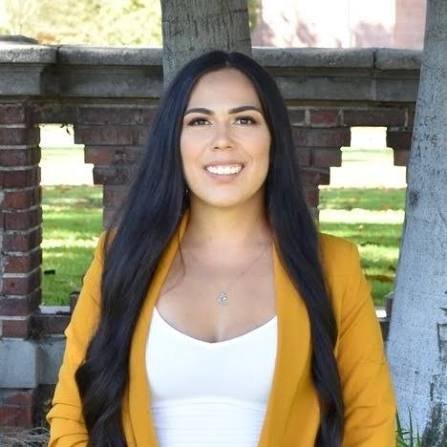

Priscilla Alvarez is a CNN reporter known for immigration and White House coverage. Explore her career, education, beat, and why her reporting matters.
Priscilla Alvarez: The CNN Reporter Behind Washington’s Immigration and White House Coverage
Washington is full of faces that appear on screen during a breaking-news hour, but only a small number of reporters become the people viewers trust to explain what a policy change will actually mean for ordinary lives. Priscilla Alvarez has earned that kind of trust. Over the course of her career she has moved from internships and fellowships to the political desks of respected publications, and then to CNN, where she became one of the network’s most recognizable voices on immigration politics and policy. Her path is a useful case study for anyone curious about how modern political journalism is built, one beat and one deadline at a time.
This guide walks through her background, her education, her early newsroom experience, her time at CNN, and the kind of reporting her beat demands. It also looks at the community work she is involved in and at how readers can follow her coverage with a critical eye. Where information is thin, the article says so plainly instead of repeating the rumors that circulate on low-quality websites. The goal is a clear, accurate, and readable portrait of a working journalist whose job is to make complicated government decisions understandable.
Who Is Priscilla Alvarez and Why Does She Matter?
Priscilla Alvarez is a reporter at CNN who built her reputation covering immigration politics and policy, and who now reports from the White House as a correspondent. She joined the network in January 2019, after working as a politics editor and writer at The Atlantic. Her bio notes that she is fluent in Spanish, that she grew up in Leesburg, Virginia, and that she briefly lived in Panama. She is based in Washington, D.C., which is exactly where a reporter on her beat needs to be, close to agencies, advocates, lawmakers, and the officials who decide how laws are carried out.
Why does she matter? Immigration is one of the most emotional, most politicized, and most technically complicated subjects in American public life. A single executive order can change the lives of millions of people, yet the details often hide in legal language, agency memos, and court filings. Reporters who can read those documents, call the right sources, and then explain the result in plain English perform a real public service. That is the territory Alvarez works in, and it is why her byline appears so often when the country is trying to understand a sudden shift in border or asylum policy.
Growing Up in Virginia and Learning Two Language
According to her CNN biography, Alvarez grew up in Leesburg, a historic town in Loudoun County, Virginia, not far from the nation’s capital. Growing up within driving distance of Washington can quietly shape a future political reporter. The city’s institutions, monuments, and news cycles sit close enough to feel like part of the local landscape, and many people who report on government today first absorbed that atmosphere as teenagers. She also spent a short period living in Panama, an experience that adds an international dimension to her story and helps explain her comfort moving between cultures.
Her fluency in Spanish is a practical asset as much as a biographical detail. Immigration reporting often involves people whose first language is not English, from families waiting at a border crossing to community leaders explaining how a rule change is landing in their neighborhood. A reporter who can speak with sources directly, without relying entirely on translation, tends to hear nuance that others miss. Language skills also build trust, because people are more willing to share difficult experiences when they do not have to filter them through a third person.
Studying Journalism and Policy at Virginia Tech
Alvarez studied at Virginia Tech, where she majored in journalism and in world politics and policy. That pairing is worth noticing. Journalism teaches the craft of finding facts, verifying them, and telling a story clearly, while a policy-focused degree builds the background needed to understand how governments really function. Plenty of talented writers can describe a scene; fewer can explain why a rule written at one agency changes what happens at a border station hundreds of miles away. Training in both areas gives a political reporter a head start.
Universities that blend media training with political study tend to produce reporters who are comfortable with the unglamorous parts of the job, such as reading regulations, following budgets, and tracking how a bill moves through committee. Those habits matter later in a career, because the stories that change public understanding are often hiding in documents that most people would never open. A strong academic foundation does not replace years of reporting experience, but it gives a young journalist a framework for making sense of the flood of information that arrives every day in a Washington newsroom.
Early Newsroom Experience Before Joining CNN
Before CNN, Alvarez worked in several well-known outlets that served as a proving ground. She was a fellow at National Journal in 2015, a publication long associated with detailed coverage of Washington policy, and her work has also appeared in Washingtonian Magazine. These roles gave her exposure to the rhythms of Capitol Hill reporting, where deadlines are tight, sources are guarded, and the best stories come from patient relationship-building rather than from press releases.
She then became a politics editor and writer at The Atlantic. In that role she covered the 2016 presidential election, the first years of the Trump administration, and U.S. immigration policy. Few assignments could be more demanding for a young political journalist. The 2016 campaign upended assumptions about how elections work, and the early months of a new administration produced a steady stream of policy announcements, legal fights, and shifting priorities. Reporting through that period, while also editing, requires speed, judgment, and the ability to separate real developments from noise. It is also where her focus on immigration sharpened, setting up the move to CNN.
As the old newsroom saying often attributed to Philip Graham puts it, journalism is the first rough draft of history. For reporters who cover a fast-moving administration, that line is less a slogan than a daily working condition. The first version of a story has to be fast enough to matter and careful enough to hold up, and early-career experience at places like these is where that balance gets learned.
Joining CNN in January 2019
In January 2019, Alvarez joined CNN as a reporter covering immigration politics and policy. The timing was significant. Immigration was dominating the national conversation, and the network needed reporters who could follow developments in the courts, at federal agencies, in Congress, and along the border. Moving from a magazine environment to a television and digital news operation also meant adapting to a different pace. A story might need to run online within minutes, appear on air within the hour, and then be updated again that night as new details came in.
CNN’s reporting model rewards versatility, and her work has reflected that. She has appeared across the network’s programming, and her bio notes appearances on The Lead with Jake Tapper, CBS This Morning, MSNBC, and NPR. Appearing on a wide mix of platforms is a sign that editors and producers see a reporter as dependable under pressure, able to summarize a complicated issue in a minute or two without sacrificing accuracy. For viewers, it also means the person writing a story is often the same person explaining it live, which adds a layer of accountability to the coverage.
Why Immigration Policy Is Such a Demanding Beat
Immigration reporting sits at the crossroads of law, politics, economics, and human stories, and it rarely stays quiet for long. A reporter on this beat has to understand how visas, asylum claims, detention policy, border enforcement, and federal court rulings interact, and how a decision in one area ripples into another. The legal framework alone can fill libraries, and it changes whenever a new administration reorders its priorities. Add the political stakes, with every proposal attracting passionate supporters and critics, and the margin for error becomes very small.
There is also a moral and historical weight to the subject. The poem engraved at the base of the Statue of Liberty, written by Emma Lazarus in 1883, includes the famous invitation, “Give me your tired, your poor, your huddled masses yearning to breathe free.” Americans have debated what that promise means in practice ever since. Reporters covering the issue today are not asked to settle that debate. Their job is to document what policies say, how they are enforced, and what happens to the people affected, so that citizens can argue from facts rather than rumor.
Moving to the White House Beat
CNN later promoted Alvarez to correspondent covering the White House, a role that places her at the center of the story of how presidential decisions are made and announced. The White House beat is often described as one of the most visible jobs in journalism, but visibility is only part of it. The real work happens in the hours before and after a camera light turns on, when reporters work sources inside and outside the building to understand why a decision was made, who pushed for it, and what comes next.
Her background gives her an edge in that environment. Immigration has been one of the defining policy fights of recent administrations, so a correspondent who already knows the agencies, the legal terms, and the key players can add depth when a presidential announcement touches the issue. She can also connect a headline to its history, explaining how a new directive compares with earlier efforts and where legal challenges are likely to arise. That kind of context is exactly what busy viewers need when a major story breaks and they want to know what it really means.
How Priscilla Alvarez Approaches a Policy Story

A reporter’s methods are rarely announced in public, so the safest way to understand her approach is to look at the craft her beat requires and at what her published work reflects. Policy stories start with primary sources: memos, regulations, court filings, data releases, and official statements. Good reporters read them closely, compare them with earlier versions, and then ask people with firsthand knowledge to confirm or challenge what the paper suggests. The work of Priscilla Alvarez, like that of other experienced policy reporters, reflects this layered process, in which documents provide the skeleton and human sources provide the context.
The second part of the craft is translation. A story can be perfectly accurate and still fail if readers cannot follow it, so strong reporters learn to explain technical terms the first time they appear, to lead with what changes for real people, and to avoid drowning the audience in acronyms. The civil rights journalist Ida B. Wells wrote that “the way to right wrongs is to turn the light of truth upon them.” In practical terms, that means shining a steady, careful light on how government decisions land, without exaggeration in either direction.
Career Snapshot at a Glance
The table below gathers the publicly documented milestones of her career in one place. It is based on her published CNN biography and is intentionally limited to details that are consistently confirmed, because many popular profile pages mix in unverified claims.
| Area | Details |
|---|---|
| Current role | CNN correspondent covering the White House |
| Joined CNN | January 2019, initially covering immigration politics and policy |
| Previous role | Politics editor and writer at The Atlantic |
| Earlier experience | National Journal fellow in 2015; work published in Washingtonian Magazine |
| Major topics | Immigration, presidential politics, federal policy, the 2016 election, the early Trump administration |
| Education | Virginia Tech, majoring in journalism and world politics and policy |
| Languages | English and fluent Spanish |
| Hometown | Leesburg, Virginia, with a brief period living in Panama |
| Based in | Washington, D.C. |
| Professional involvement | Board member of the National Association of Hispanic Journalists DC chapter |
Looking at the table, one pattern stands out: each step builds directly on the last. Policy education led to a fellowship on a policy-heavy publication, which led to a political editing role during a historic campaign, which led to a national immigration beat at CNN, and eventually to the White House. Careers in journalism are rarely perfectly linear, but this one shows how a clear specialty can become a launchpad.
Representation and Community Work in Journalism
Beyond her reporting, Alvarez is on the board of the Washington, D.C. chapter of the National Association of Hispanic Journalists. Groups like this exist to support journalists, promote fair and accurate coverage of Latino communities, and encourage newsrooms to reflect the audiences they serve. Board service is volunteer work that takes time and energy on top of an already demanding reporting schedule, so it signals a genuine investment in the profession’s future rather than a résumé line.
Representation matters in political journalism because the stories that get told, and the way they are framed, depend heavily on who is in the room. A newsroom with reporters who understand different languages and communities is more likely to catch details that others would overlook and to avoid shortcuts that flatten complex populations into stereotypes. Mentoring, networking, and advocacy through organizations like NAHJ help younger journalists find opportunities, which in turn strengthens coverage for everyone who depends on the news.
Media Appearances and Explaining the News Live
Television and radio appearances are a major part of modern political reporting. Alvarez has appeared on The Lead with Jake Tapper, CBS This Morning, MSNBC, and NPR, according to her CNN profile. Each of those platforms asks something slightly different of a guest. Cable news wants clear, concise summaries that can survive a short segment. Public radio leans toward conversational depth, with room for context and nuance. Appearing comfortably in all of them requires flexibility, preparation, and the ability to stay calm when a live conversation turns in an unexpected direction.
For viewers, these appearances are often the easiest way to understand a complicated development quickly. A reporter who has spent days gathering documents and calling sources can compress that work into a few minutes of spoken explanation, flagging what is confirmed, what remains unclear, and what to watch for next. That honesty about uncertainty is one of the most valuable things a correspondent can offer. Anyone interested in the work of Priscilla Alvarez can use these appearances as a complement to her written reporting, which usually carries more detail and sourcing.
How to Read and Follow Her Reporting
The simplest way to follow her work is through CNN’s website and apps, where her stories are collected under her author page. Following a reporter directly, instead of relying on social media excerpts, gives you the full context of each story, including the sourcing, the background paragraphs, and the caveats that headlines tend to leave out. If a story involves a legal or policy change, reading to the end often reveals which parts are settled and which parts are still being contested in court or in Congress.
It also helps to read her coverage alongside reporting from other outlets and, where possible, the original documents. Comparing accounts is a healthy habit for any news consumer. When several reputable organizations report the same core facts, confidence grows; when they differ, the differences point to the questions worth investigating further. Treating a favorite reporter as one important source among several, rather than the only source, is the approach that good journalists themselves recommend.
Lessons Readers and Young Journalists Can Take From Her Career
For aspiring reporters, the career of Alvarez offers several practical lessons. First, specialization pays off. By developing real expertise on immigration policy early, she became a go-to voice when the topic dominated the news. Second, early opportunities such as fellowships, magazine work, and editing roles build both skills and relationships. Third, language and cultural fluency are professional strengths, not side notes, especially in a field where understanding the people affected by policy is part of understanding the policy itself.
For general readers, the main takeaway is about media literacy. Reporters who cover government do much more than repeat what officials say. They verify, contextualize, and challenge, and they often do so under intense time pressure. Appreciating that process makes it easier to evaluate news critically, to recognize careful reporting when you see it, and to understand why a correction or an update is usually a sign of accountability rather than failure. In a crowded information environment, those habits are more valuable than ever.
Separating Verified Facts From Online Rumors
Searching for the name of any prominent journalist will turn up dozens of pages promising details about age, family, income, and relationships. Many of these pages contradict one another, recycle the same unsupported claims, or invent details to fill space. Birth years, birthplaces, awards, and family information appear in conflicting versions across the web, which is a strong signal that they should not be trusted unless a reliable source confirms them. Priscilla Alvarez keeps most personal details out of public view, and that is a choice worth respecting.
The most dependable information comes from the reporter’s own employer biography, her published work, and professional organizations she belongs to. Those sources agree on the essentials: her role at CNN, her time at The Atlantic, her education at Virginia Tech, her Spanish fluency, and her board service with the National Association of Hispanic Journalists DC chapter. Everything beyond that should be treated cautiously. Good research habits, like checking primary sources and noticing when many sites repeat identical claims, protect readers from misinformation about public figures just as they do with news stories.
Conclusion
The story of Priscilla Alvarez is, at its core, a story about how serious political journalism gets made. A Virginia upbringing, a policy-focused education at Virginia Tech, early experience at National Journal and The Atlantic, and a move to CNN in 2019 combined to create a reporter who understands both the law and the human consequences of immigration policy. Her rise to the White House beat shows how expertise, steady performance, and credibility can open doors in a competitive industry.
For readers, her work is a reminder of why careful reporting matters. Policy decisions made in Washington reach families, workers, students, and communities far from the capital, and someone has to explain them accurately and clearly. By staying focused on facts, using plain language, and supporting the next generation of journalists through community service, Alvarez represents a style of reporting that is both rigorous and accessible. Anyone who wants to understand immigration and presidential decision-making better can learn a great deal by following her coverage with an open and curious mind.
Frequently Asked Questions
Who is Priscilla Alvarez?
Priscilla Alvarez is a reporter at CNN who covers immigration politics and policy and who reports on the White House as a correspondent. She joined CNN in January 2019 after working as a politics editor and writer at The Atlantic, and her work has also appeared in outlets such as National Journal and Washingtonian Magazine. She is based in Washington, D.C.
What does she cover at CNN?
Her reporting centers on immigration policy and presidential politics. That includes how federal agencies carry out immigration rules, how court decisions affect enforcement, and how decisions made at the White House shape the national debate. Because immigration policy often changes quickly, her coverage tends to focus on explaining what is new, what is confirmed, and what it means for the people involved.
Where did she study?
She studied at Virginia Tech, where she majored in journalism and in world politics and policy. That combination of media training and policy knowledge is a strong foundation for a political reporter, since it supports both clear storytelling and a deeper understanding of how government works.
What languages does she speak?
According to her CNN biography, she is fluent in Spanish. She also briefly lived in Panama. Speaking Spanish is a major advantage for a reporter covering immigration, because it allows direct conversations with sources and communities that might otherwise be harder to reach.
Is she involved in any professional organizations?
Yes. She serves on the board of the Washington, D.C. chapter of the National Association of Hispanic Journalists, an organization that supports Latino journalists and works to improve the accuracy and fairness of coverage. Volunteer leadership of this kind reflects a commitment to the broader health of the profession.
Where can I follow the reporting of Priscilla Alvarez?
The best place to start is CNN’s website and mobile app, where her articles and video reports are collected on her author page. Reading her full stories, rather than only headlines or social media snippets, gives the clearest picture of her coverage, and comparing it with reports from other reputable outlets helps build a well-rounded understanding of the news.
Why do online profiles of her contain conflicting details?
Many websites publish automatically assembled or loosely researched profiles that copy one another and add unverified details to appear complete. That is why birth years, family details, and other personal information often differ from page to page. For reliable information about her career, it is best to rely on CNN’s official biography, her published reporting, and the professional organizations she belongs to.