Meta description: Looking for san antonio spurs vs lakers match player stats? Learn how to read the box score, who to watch, and what the numbers really mean.
San Antonio Spurs vs Lakers Match Player Stats: How to Read the Numbers and Who to Watch
Few matchups in the NBA carry as much history and star power as the Spurs against the Lakers. One franchise built a dynasty on patience, ball movement, and a gravity-defying big man. The other made its name on glamour, superstar scoring, and banners that line the rafters in Los Angeles. When fans type san antonio spurs vs lakers match player stats into a search bar, they usually want more than a final score. They want to know who dominated the glass, who got hot from three, who fouled out, and whether the star players showed up when it counted.
This guide breaks down how to read those numbers like an analyst, which players on both sides tend to shape the outcome, and what to look for in the next meeting between the two teams. The next scheduled game has not been played yet, so this article does not invent a box score. Instead, it gives you a framework you can apply the moment the final buzzer sounds, along with context on both rosters and what the early part of the 2026-27 season has shown so far.
Why Fans Search for Spurs vs Lakers Player Stats
A final score tells you who won, but it hides almost everything interesting about how the game unfolded. A 112-108 result could mean one star carried the offense for forty minutes, or it could mean a deep bench quietly won the fourth quarter. That is why searches for san antonio spurs vs lakers match player stats spike every time these two teams meet. People want the story behind the scoreboard, and the individual lines are where that story lives.
There is also a practical side. Fantasy managers need to know whether a big man’s rebounding was a one-night wonder or a trend. Bettors studying player props want to see how a guard performs against a specific defensive scheme. Casual fans simply want to settle arguments with friends about who was the best player on the floor. Whatever your reason, a good box score gives you the evidence, and learning to read it properly turns a wall of numbers into a clear narrative.
The Stats That Matter Most in a Box Score
Most people glance at points, rebounds, and assists, and those three columns do matter. But the more telling numbers often sit a little further to the right. Shooting splits show whether a scorer earned his points efficiently or needed twenty shots to get there. Turnovers reveal whether a playmaker was careless or controlled. Plus-minus, while noisy in a single game, hints at which lineups the coaches trusted when the margin was tight.
Mark Twain famously joked that there are three kinds of lies: lies, damned lies, and statistics. The line applies neatly to basketball. A player can score thirty points on poor shooting while his team loses by ten, and another can score twelve with perfect efficiency and several game-changing defensive plays. Reading stats well means looking at them in combination, never in isolation, and asking what each number says about the flow of the game rather than just the total.
A Quick Reference Table for Reading Player Stats

The table below translates the most common box score columns into plain language, with a note on what each one typically reveals in a Spurs and Lakers game. Keep it handy when you open a box score for the first time after a matchup.
| Stat | What It Measures | What to Look For in This Matchup |
|---|---|---|
| Points | Total scoring | Whether the Lakers’ stars or the Spurs’ young core carried the offense |
| Field goal percentage | Shooting efficiency | Efficient scorers matter more than high-volume ones |
| Three-point makes and attempts | Perimeter shooting | Spacing is crucial for both offenses |
| Free throws | Aggression and foul trouble | Stars drawing contact late in close games |
| Rebounds | Control of the glass | Size advantage in the frontcourt, especially for San Antonio |
| Assists | Ball movement | The Spurs’ passing versus the Lakers’ isolation-heavy sets |
| Turnovers | Ball security | Live-ball giveaways that fuel fast breaks |
| Steals and blocks | Defensive playmaking | Rim protection and passing-lane disruption |
| Plus-minus | Net score while on court | Which lineups actually won the minutes |
| Minutes | Coach’s trust and rotation | Foul trouble or blowouts that change playing time |
Once you know what each column represents, the numbers start to talk. A star with a high usage rate and a poor plus-minus tells a very different story from a role player with a modest stat line and a big positive swing. Tables like this one exist because the best analysis starts with knowing what you are looking at.
The Spurs’ Core: Who Drives San Antonio’s Numbers
San Antonio’s identity revolves around Victor Wembanyama, the towering French center whose combination of length, skill, and shot-blocking has changed how opponents plan every possession. His box scores tend to stand out in more than one column at the same time: points, rebounds, blocks, and the occasional deep three. When you open any version of san antonio spurs vs lakers match player stats, his line is usually the first place to look, because his influence reaches the defensive end in ways the scoring column alone cannot capture.
Around him, the supporting cast gives the Spurs real versatility. De’Aaron Fox brings speed and shot creation at the point guard spot, while Stephon Castle and Dylan Harper add athleticism and playmaking from the backcourt. Veteran forward Keldon Johnson has shown he can erupt for big scoring nights off the bench or in the starting group, with Johnson and Harper each scoring 24 points in a win over Indiana earlier this year. That balance means the Spurs can win in different ways, and their individual stat lines often vary more from game to game than you would expect from a team built around one superstar.
The Lakers’ Stars and What Their Stat Lines Usually Show
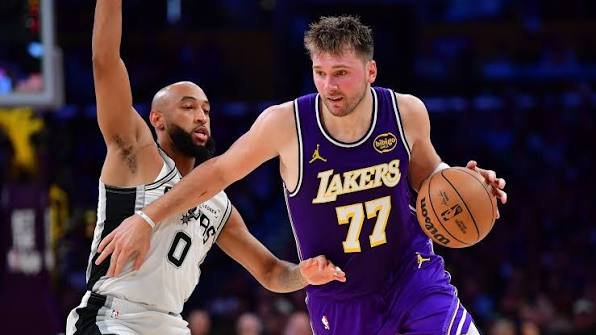
On the other side, the Lakers lean heavily on Luka Doncic, whose stat sheets look like they belong to a video game. Points, rebounds, and assists often reach double digits in all three categories, and his late-game decision-making can swing a close contest. Highlights from recent meetings between these teams featured Doncic starring in a Lakers victory, a reminder that when he is locked in, the Spurs’ defense has to work for every stop.
The key with the Lakers is reading how their supporting players fit around that central creator. When the role players hit open threes and defend the perimeter, the offense looks nearly unstoppable. When they struggle, the box score often shows a lopsided distribution, with one or two players taking a huge share of the shots. Checking the efficiency numbers and the turnover totals for the Lakers’ ball handlers usually tells you quickly whether the team played with control or relied on individual brilliance to stay afloat.
How the Matchup Plays Out on the Court
The stylistic contrast is what makes this pairing so enjoyable. San Antonio tends to emphasize spacing, quick passing, and a defense that funnels drives toward a legitimate rim protector. Los Angeles prefers to let its best creator probe the defense, drawing help and kicking the ball to shooters. When those philosophies collide, the box score tends to show a battle between ball movement and individual creation, and the winner is usually the team whose approach produces the better shot quality.
The details matter too. Pace affects how many possessions each team gets, and with fewer possessions, every turnover counts for more. Free throw volume can swing the game in the fourth quarter, and foul trouble for a key big man can unravel an entire defensive game plan. One recent headline noted that Wembanyama fouled out in a game against the Lakers, a perfect example of how a single column, personal fouls, can completely change what the rest of the stat sheet looks like.
The Spurs’ Early 2026-27 Form
Context helps when you evaluate any individual performance, so here is a look at how San Antonio started the new season before the next Lakers meeting. Through four games, the Spurs split their results, showing both the promise and the growing pains of a team still refining its rhythm.
| Date | Opponent | Result | Score |
|---|---|---|---|
| October 20 | Oklahoma City Thunder (home) | Loss | 104-116 |
| October 23 | Houston Rockets (home) | Loss | 110-114 |
| October 24 | Dallas Mavericks (away) | Win | 122-106 |
| October 27 | Sacramento Kings (home) | Win | 130-103 |
The two wins came by wide margins, and the two losses were against tough opponents, which suggests the offense can explode when the shots fall. The team was also in the middle of a close fourth quarter against Utah when this was written, so the record will keep moving. If you want to evaluate individual numbers fairly, always compare them against the team’s recent trend rather than a single outlier game.
What to Watch in the Next Spurs vs Lakers Game
The next meeting between the teams is scheduled for Friday, November 27, at 8:30 p.m. Central time in San Antonio. It is a home game for the Spurs, which matters because teams generally shoot a little better in familiar surroundings and benefit from crowd energy during runs. Anyone planning to follow the player stats live should keep an eye on the pregame injury reports, since a single late scratch can reshuffle minutes across both rotations.
Several storylines are worth tracking. Watch how the Spurs defend Doncic in pick-and-roll situations, because the choice between switching and dropping will show up in his assist and turnover totals. Look at how Wembanyama and the Lakers’ frontcourt trade possessions in the paint, since the rebounding margin often decides close games. And pay attention to the bench units, because depth scoring is frequently the hidden factor that separates a competitive loss from a comfortable win.
Advanced Metrics Worth Knowing
If you want to go beyond the traditional box score, a few advanced numbers can sharpen your analysis. True shooting percentage combines two-pointers, threes, and free throws into a single efficiency figure, which makes it far more reliable than raw field goal percentage. Usage rate estimates how many of a team’s possessions a player ends with a shot, free throw trip, or turnover, helping you see who really owned the offense.
Player efficiency rating and box plus-minus try to boil a player’s contribution into one number, though they work best as conversation starters rather than final verdicts. For defensive impact, look at blocks and steals alongside opponent shooting percentages when a player was nearby. As Michael Jordan once put it, talent wins games, but teamwork and intelligence win championships. Advanced metrics are simply another way to measure that intelligence, showing you which players made the right decisions rather than just the flashy ones.
Where to Find Reliable Box Scores and Live Updates
The most trustworthy places to find player stats are the official league site and its app, along with major sports outlets that publish full box scores within minutes of the final buzzer. These sources list minutes, shooting splits, rebounds, assists, and plus-minus for every player who took the floor. For live games, official apps and broadcast platforms usually update fastest, which is useful if you are tracking props or fantasy lineups in real time.
Be cautious with low-quality aggregator pages that recycle old recaps or mix up seasons. Some sites publish generic summaries that never name the players involved, which makes them useless for serious analysis. When you search for san antonio spurs vs lakers match player stats, check that the date and season on the page match the game you care about, because these two teams have met many times and the rosters have changed dramatically over the years.
A Brief Look at the History Behind the Rivalry
The Spurs and Lakers have crossed paths in some of the NBA’s most memorable playoff series, and the history adds extra weight to every regular-season meeting. San Antonio’s championship teams were known for fundamentals and defensive discipline, while the Lakers’ title runs featured transcendent individual stars. That clash of cultures has been a recurring theme for decades, and the present-day versions of both franchises carry echoes of those identities.
Today’s matchup is different in personnel but familiar in spirit. The Spurs once again have a franchise big man who changes the geometry of the court, and the Lakers once again revolve around a generational offensive talent. For fans who remember the older battles, comparing today’s stat lines with those of previous eras can be a fun exercise, as long as you account for the faster pace and heavier three-point volume that define the modern game.
Tips for Fantasy Managers and Prop Bettors
Fantasy players should focus on minutes and usage rather than reputation. A player who logs thirty-five minutes in a competitive game has far more upside than a bench contributor who sits during a blowout. Check how recent matchups have gone for specific positions, and remember that pace and defensive scheme can change a player’s value from night to night. Always confirm the starting lineup before tipoff, since late changes can turn a good plan into a wasted roster spot.
If you follow player props, treat any past box score as one data point rather than a guarantee. Sample sizes are small, and a single game influenced by foul trouble or garbage time can distort an average. The most useful habit is to look at a player’s last several games alongside the matchup context. Please remember that any wagering should be done responsibly and only where it is legal, and that no statistic can predict the unpredictable bounce of a basketball.
Conclusion
The best way to approach any set of Spurs and Lakers numbers is to treat the box score as a story rather than a spreadsheet. Points, rebounds, and assists give you the headline, but shooting efficiency, turnovers, free throws, and plus-minus supply the plot. When you pair those details with an understanding of how each team wants to play, the data starts to explain why a game unfolded the way it did.
The next meeting arrives on November 27, and with a young, versatile Spurs group facing a Lakers team built around an elite creator, there is plenty to watch. Whether you are a fan, a fantasy manager, or just someone who loves digging into the details, knowing how to interpret san antonio spurs vs lakers match player stats will make every future game more enjoyable and every argument about the best player on the floor a lot more informed.
Frequently Asked Questions
When do the Spurs and Lakers play next?
The next scheduled meeting is on Friday, November 27, 2026, at 8:30 p.m. Central time, with the Spurs hosting. Schedules can change, so it is wise to confirm the date and time on the official league site before planning your viewing. Once the game ends, you can find the full san antonio spurs vs lakers match player stats on any major sports outlet within minutes.
Which players should I watch most closely in a Spurs vs Lakers game?
Victor Wembanyama is the obvious focal point for San Antonio because he influences scoring, rebounding, and rim protection all at once. De’Aaron Fox, Stephon Castle, and Dylan Harper also shape the Spurs’ pace and playmaking. For Los Angeles, Luka Doncic is the player whose stat line usually determines how the game flows, so his scoring, assists, and turnovers are good indicators of the Lakers’ performance.
What is the most important stat in a Spurs vs Lakers box score?
No single number tells the whole story, but shooting efficiency combined with turnovers gives a fast read on how well a player performed. Rebounding margin also matters because size and activity on the glass often decide close games between these teams. When you review san antonio spurs vs lakers match player stats, compare these categories across both rosters to see which side controlled the game.
Where can I find accurate player stats after a game?
Official league websites and major sports networks publish complete box scores shortly after the final buzzer, including minutes, shooting splits, and plus-minus for every player. Avoid pages that summarize games without naming players or that mix up seasons. Always check the date on the page so you know you are reading the correct matchup.
Do past Spurs vs Lakers results predict the next game?
Past results offer context, but they are not reliable predictors because rosters, injuries, and form change constantly. A player who dominated one meeting may face a new defensive plan the next time around. Use earlier box scores to spot tendencies, such as how a team defends a certain action, and then weigh them against current-season trends.
Why does plus-minus sometimes look strange for star players?
Plus-minus measures the team’s net scoring while a player is on the court, so it is affected by who else is playing and by garbage-time minutes. A star can post a negative number simply because the bench struggled alongside him or because the opponent had a hot shooting stretch. It is most useful when read together with efficiency and minutes rather than as a standalone grade.