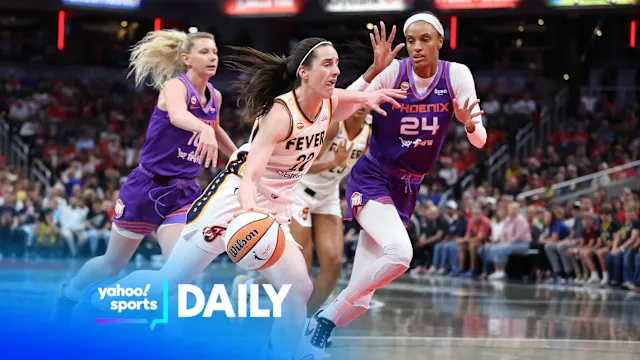

Meta description: Caitlin Clark injury explained: the full timeline from groin and quad issues to her 2026 back trouble, plus what it means for the Fever’s future.
Caitlin Clark Injury: The Full Timeline, Latest Updates, and What Comes Next
Few athletes in any sport are watched as closely as Caitlin Clark. Every wince, every trip to the locker room, and every line on a team injury report turns into a national conversation within minutes. The Caitlin Clark injury story now stretches across two WNBA seasons, and it has been confusing to follow, because the problems moved around her body, changed names, and sometimes resurfaced after fans thought they were behind her. A quad strain became a groin problem, the groin problem became a lost season, and a different issue, her back, followed her through the following summer and into the playoffs.
This guide pulls all of it into one place. It walks through what happened and when, what the Fever and Clark herself have said, how the injuries changed the way Indiana played, and how to read the weekly injury report without panicking over a single word. It also looks at the physical side of the sport, including the rough treatment guards take, and at what a realistic outlook for the next season could look like. The goal is to give you a clear, calm picture of the situation, whether you are a longtime Fever fan, a fantasy manager trying to set a lineup, or someone who simply wants to understand why the headlines keep appearing.
From Never Missing a Game to a Fixture on the Injury Report
For the first stretch of her career, durability was one of the least talked about parts of Clark’s game. She never missed a game because of injury at Iowa, and she stayed healthy through a rookie season that ended with the WNBA’s Rookie of the Year award, according to the Associated Press. Clark did not miss a game to injury in college or during her rookie year in the league. That clean record helped shape expectations. Fans, analysts, and even opponents had come to treat her as someone who simply showed up and produced, night after night, no matter how many defenders were assigned to shadow her.
That is why the change felt so abrupt. Her second professional season followed a long run of heavy minutes that began in college, rolled through a deep tournament run, a draft, and an intense rookie campaign with very little true downtime. None of that proves a cause, and nobody outside the team’s medical staff can say precisely why her body started pushing back. Still, it is worth remembering that the transition from college basketball to the WNBA brings a steep jump in physicality, travel, and game density, and even the most conditioned athletes can struggle when that load keeps stacking up.
The attention surrounding her also changed the way every minor ailment was received. A tight hamstring on an ordinary roster player might merit a single line in a local recap. For Clark, a tweak drew live updates, cameras trained on the bench, and speculation about timelines before the team had said a word. That scrutiny matters for understanding the story, because it explains why even small details, like a day-before status listing or a missed practice, ended up shaping the national narrative around her health.
How the 2025 Season Unraveled Piece by Piece

The trouble in 2025 did not arrive as one dramatic event. It arrived as a series of setbacks that made it hard for Indiana to settle into any rhythm. The first notable one was a left quad strain, which local reporting indicated was a fresh injury rather than a continuation of something earlier. An IndyStar reporter noted that the left quad strain was a new injury and not a carryover. Clark was ruled out for a stretch of games, and one of them was a much anticipated meeting with Angel Reese and the Chicago Sky. That game was among those she sat out after tightness in the same leg. The Fever were forced to manage without their engine within weeks of the season getting started.
A left groin issue followed in early July, and by that point the pattern was becoming impossible to ignore. Clark missed five games with the left groin problem before she expected to return on a Wednesday. The comeback looked promising, and for a brief window it seemed that the worst was over. Then came the Caitlin Clark injury that changed the whole season. On July 15, in the closing minute of a win at Connecticut, she left the floor holding her right groin area, and the Fever’s own guard appeared visibly emotional as she walked off. The Fever beat the Sun 85-77, but Clark was clearly upset after leaving the game in the final minute.
What made this injury particularly frustrating was the timing. The Fever had just rolled into the All-Star break, Clark had been named to the game she was supposed to lead, and momentum was finally building after an uneven first half. Instead, she watched the festivities from the sideline and then spent the next weeks working through rehab with no public timetable. Her absence from the All-Star game, followed by missed games against the Liberty and others, kept pushing the return date further out, and each update seemed to carry the same message of patience.
The Groin Injury That Ended Clark’s 2025 Season
The team handled the right groin problem cautiously, and the public updates reflected that. Coach Stephanie White said there was no timetable for a return, and the Fever repeatedly insisted that they would not rush her. By early August, Clark had missed roughly 17 of 30 games across three different lower-body injuries, and the Fever still declined to offer a return date. In the background, there was also a mild left ankle bone bruise that was reported later in August. According to IndyStar reporting, the ankle issue dated back to August 7 and was not expected to change the timeline for her groin recovery. It added to the sense that nothing was going smoothly.
On September 5, the other shoe dropped. The Fever announced that Clark would miss the remainder of the season. The Associated Press reported that the right groin injury would keep her out for the rest of Indiana’s schedule. In her own statement, Clark said, “Disappointed isn’t a big enough word to describe how I am feeling.” The team’s general manager, Amber Cox, explained the decision in blunt terms, saying that “time is not on our side” as the schedule wound down. The statement also expressed hope that Clark would be back at full strength to begin the following campaign.
The numbers underline how much she lost. By the time the end of the regular season approached, Clark had appeared in only 13 of her team’s first 40 games. The league still recorded strong attendance throughout the year, which shows how deep the public interest had run, but it also raised a difficult question about how much better the season could have been with its biggest draw on the floor. The Fever, meanwhile, were hit by a wave of other injuries, and five players ended up lost for the year, including Clark.
Entering 2026 With High Hopes and a Nagging Back
When the next season opened, the plan was straightforward. Clark would arrive rested, rehabbed, and ready to build on the flashes of brilliance she had shown when healthy. In many ways she did exactly that, and the early production was extraordinary. By early July she was averaging a career-high 21.2 points in 17 games. Yet the story of her health was never fully quiet, because a back issue appeared early and lingered through much of the year.
The first sign came right away. During the season opener against the Dallas Wings, Clark briefly left the game so that her back could be adjusted. Later, she was suddenly ruled out of a game against the Portland Fire for the same reason, and she also missed time in May. Reports noted that she dealt with the back problem for much of the season and that she described it as a mental battle as well as a physical one. That comment is a helpful reminder that persistent injuries do more than hurt. They interrupt routines, create doubt about whether a movement will trigger pain, and can make it hard to play with the free, aggressive style that made her famous.
The injury report added another layer of public tension. Heading into the June 24 game, Clark had been listed as probable with a back ailment on the Fever’s day-before report for 13 straight games. Probable generally means a player is expected to take the court, and she did, again and again. Still, a long streak of that designation tells you something important. She was effectively playing through a recurring issue, and the staff was monitoring it daily, which sets the stage for how the next flare-up unfolded.
The June 24 Mercury Game and the Fallout
The most consequential moment of the 2026 season came on June 24 in Indianapolis against the Phoenix Mercury. Clark started hot and was playing some of the best basketball of her career, which is why what happened next felt so jarring. She seemed to tweak her back after being fouled in the second quarter, and she left with 5:15 remaining in the third. By then she already had 19 points, eight assists, and a strong shooting night. The Fever announced she would not return, and Indiana went on to lose a tight game, 111-109, a result that stung even more because of how well the first half had gone.
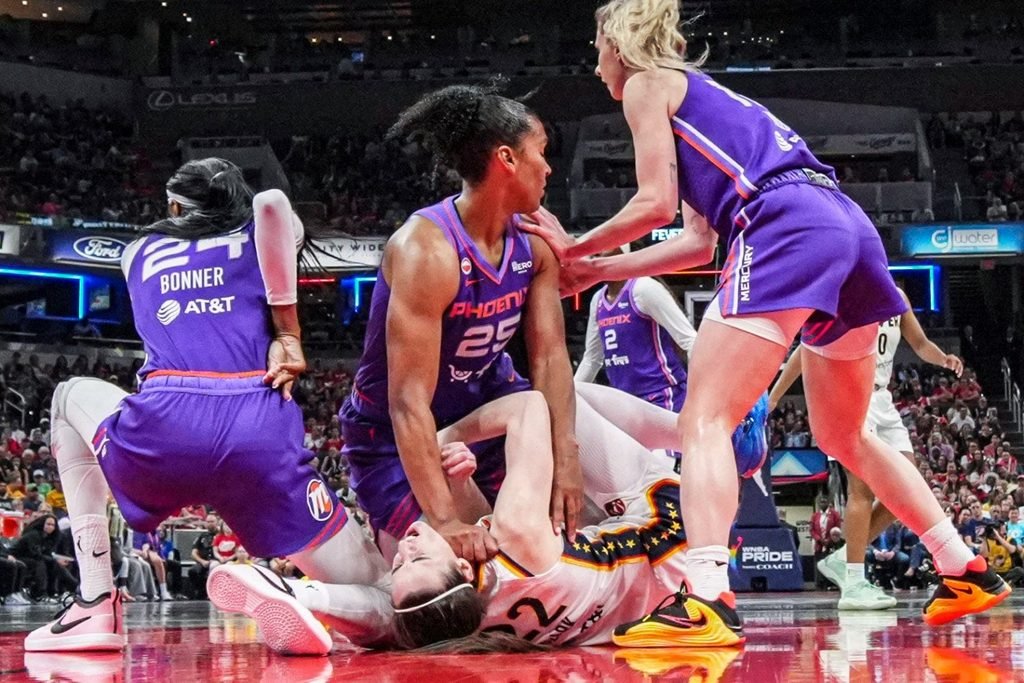
This Caitlin Clark injury also arrived at a moment when the physical treatment she receives was already a hot topic. After the loss, Coach White criticized the officiating crew following a push to Clark’s neck, though she was not sure whether it contributed to the back problem. The game also included a controversial second-quarter incident with Mercury forward Alyssa Thomas. Thomas later received a one-game suspension for a Flagrant 2 foul on the Fever guard. Whether those plays directly caused the flare-up is something nobody outside the medical staff can say, but they colored the conversation around the league’s physicality.
Clarity came a couple of days later. White confirmed that the new problem was connected to the earlier back issue, which made it a re-aggravation rather than a separate injury. That distinction matters for recovery, because re-aggravations often carry a more cautious timeline. The Fever also chose to protect her, formally ruling her out for the next game and signaling that she would miss more than a week. The team announced that she would sit out Saturday against the Sparks because of the back problem.
Recovery, Return, and the Minute Restriction
The recovery phase was measured and methodical. Clark began working out individually with the training staff rather than jumping straight back into full practices, and the team described her progress as encouraging. Coach White shared a positive update on her individual workouts even while she stayed out of full team practice. On July 3 she returned to practice, and she told reporters she felt much better, even though she was still unavailable for the next game against the Las Vegas Aces. She confirmed a return to practice on Friday but said she would not play against the Aces on Sunday.
Her actual comeback came on July 8 in Los Angeles, when she took the floor after missing two games. It was her first appearance since leaving the Mercury game nearly two weeks earlier, and she was held out of the next night in Phoenix. The reasoning was clear and sensible. Playing consecutive nights right after a return from a back issue can be risky, especially when the athlete is still ramping up her workload. Clark explained it simply, saying “It’s tough to come back on a back to back.” She tied the decision to minute restrictions and her progression, which is standard practice in modern sports medicine.
Looking at the larger picture, this return window shows how teams manage players now. Instead of binary decisions where someone is either out or fully cleared, organizations use staged returns. Practice participation, limited minutes, and rest on back-to-backs act as guardrails. For fans, it can feel frustrating to see a star sit during a winnable game, but the logic is to protect a long-term asset. The Fever had learned the hard way in 2025 how costly a lost season can be, and they were not eager to repeat the experience.
Playing Through It: The Late Surge and the Playoffs
Once Clark was back in the lineup, she played at a remarkably high level. By late summer, she was averaging 22.1 points and 8.3 assists while shooting career-best percentages from the field and from three-point range. That production is even more impressive when you consider the constant presence of her name on the injury report. She was clearly managing discomfort and workload, yet her efficiency kept climbing, a testament to how much craft goes into her game beyond pure athleticism.
The back listing never fully disappeared. Before a meeting with the Connecticut Sun in late August, the Fever listed her as probable with the back issue, as they had throughout the previous two months. On September 22, with the regular season nearly finished, the picture looked bright. She delivered 27 points, nine assists, seven rebounds, and four steals in a 96-77 win over the Lynx while again appearing as probable with the back for the finale. The Fever were battling for playoff positioning, and her availability was central to those hopes.
Then the postseason arrived. The Fever listed her as probable for Game 1 of the first round against the Las Vegas Aces, and coverage noted she had intermittently carried a back designation since July. She was cleared to play, which was welcome, though the story had a bittersweet edge. Reports after the series indicate Indiana’s playoff run ended with a series loss. The Fever entered as underdogs against the reigning champions, and the injuries across the roster, not just Clark’s, certainly made the task harder.
The Caitlin Clark Injury Timeline at a Glance
Because the injuries overlapped and changed locations on her body, a timeline helps keep everything straight. The table below summarizes the major setbacks across 2025 and 2026, including the nature of each issue and what it meant for her availability. It is based on team announcements and widely reported coverage, and it intentionally focuses on the events that had a real effect on games rather than every minor tweak.
| Period | Issue | Impact on Availability |
|---|---|---|
| Late spring 2025 | Left quad strain | Missed a run of games, including a matchup with the Sky |
| Early July 2025 | Left groin | Missed five games before a planned return |
| July 15, 2025 | Right groin, suffered at Connecticut | Out for weeks, then ruled out for the rest of the season on September 5 |
| August 7, 2025 | Mild left ankle bone bruise | Reported later; did not change her groin timeline |
| Spring to early summer 2026 | Lingering back problem | Brief exit in the opener, missed time in May, ruled out against Portland |
| June 24, 2026 | Back re-aggravation against the Mercury | Missed two games and returned July 8 under a minute restriction |
| Late summer to playoffs 2026 | Managed back, listed as probable | Played through, including Game 1 of the playoff series |
The pattern in the table is revealing. The first year was defined by injuries to the lower body, most of them soft tissue problems that tend to linger when an athlete tries to return too quickly. The second year was defined by a single, more persistent issue involving the back, which was managed rather than fully resolved. The shift from repeated absences to constant management is arguably a sign of progress, because it kept her on the court far more often.
It is also worth noting what the table does not show. It does not reveal the stretches when she played at less than full strength or the nights when treatment and preparation took far longer than usual. Those hidden hours are part of any modern athlete’s life, and they are rarely visible in a box score. When you see her rise for a deep three or thread a pass through traffic, remember that the performance often sits on top of a long list of daily maintenance tasks that fans never witness.
What We Know and Don’t Know About the Back Issue
One thing that stands out in all of the coverage is how little detailed medical information has been shared. The Fever have used general language such as back injury, back ailment, and re-aggravation, which fits normal practice, because teams rarely release specifics unless a surgery or a long absence is involved. As a result, anyone claiming to know the exact diagnosis is guessing. This section is general education only and is not a diagnosis of Clark or a medical opinion about her care.
In basketball players, the back is under constant strain. Jumping, landing, cutting, absorbing contact, and rotating through shots all place demands on the muscles that support the spine. Back issues in athletes can range from muscle strains and spasms to irritation of joints or discs, and the treatment varies widely depending on the cause. Most mild to moderate cases respond to rest, targeted rehabilitation, strengthening of the core and hips, and gradual return to play. Problems tend to recur when the load is ramped up too quickly or when the underlying contributors, like movement patterns or hip mobility, are not addressed.
The public comments from Clark and her coach fit that general picture. A re-aggravation tied to an earlier issue points toward something that settles down with care and then flares when force is applied, which matches the recurring probable listings. It also explains the conservative approach after June 24. The key takeaway for readers is that the absence of dramatic details is not necessarily a bad sign. In many cases, quiet and steady management is exactly what a good outcome looks like, even if it makes for less exciting headlines.
How Clark’s Availability Reshapes the Fever’s Offense
When Clark is healthy, the Fever’s attack looks different. Her range forces defenders to pick her up well beyond the arc, which creates room for Aliyah Boston inside and for cutters coming off screens. Her passing sets up teammates in rhythm, and the pace she pushes in transition puts opponents on their heels. That explains why Boston has noted the offense changes when number 22 is on the floor, a point that coverage in 2025 emphasized repeatedly. The impact goes well beyond her own scoring, and it shows up in teammates’ shot quality.
Without her, Indiana had to find other routes. In 2026, the roster showed real resilience in her short absences. Strong performances from Kelsey Mitchell, Sophie Cunningham, and the rest of the group kept the Fever competitive while Clark was out. That depth is a credit to the coaching staff and to the front office, which built a team capable of weathering turbulence. Yet resilience is not the same as dominance, and the difference was visible in the standings and in the postseason.
Injuries to other players complicated matters further. Backup center Damiris Dantas had knee surgery that ended her year, and Boston also dealt with her own health questions late in the season. This Caitlin Clark injury story cannot be separated from the broader health of the roster, because the best version of the Fever requires several key players to be available together. That is a challenge for every contender, but it is especially tough for a team whose most important player is also one of the most heavily targeted by opposing defenses.
Physical Play, Officiating, and the Toll on a Star Guard
Clark’s health is inseparable from the wider debate over how physical the WNBA has become, and how referees handle contact with its biggest star. Her coach has been outspoken about this. After the June 24 game, White voiced frustration with the officiating and with the treatment Clark continues to receive. The coach criticized the officials and expressed frustration at the physical treatment the guard keeps absorbing. Opinions among fans and analysts vary, with some arguing that the league needs stricter enforcement and others pointing out that physical defense is part of professional basketball.
The suspension of Alyssa Thomas after a Flagrant 2 foul showed that the league did see at least one play as crossing a line. Still, individual rulings do not settle the larger conversation. The debate often turns on a few key questions about intent, context, and consistency, none of which are easy to resolve from a television replay. What can be said fairly is that guards who handle the ball and shoot from deep draw a great deal of contact, and that contact adds up across a season.
For an athlete managing a back issue, the stakes are higher. Hard falls, pushes in the lane, and awkward landings can aggravate an area that is already sensitive. That is one reason why the medical team is cautious, and it is also why teammates and coaches watch the games closely for any sign of discomfort. If you want to understand why the Fever sometimes pull her aside during a game that seems winnable, this is the reason. The goal is to avoid turning a manageable situation into a prolonged absence.
How to Read a WNBA Injury Report Without Panicking
Injury reports are one of the most misunderstood parts of the sports calendar. Teams release them the day before a game, and they include labels that can sound alarming without necessarily meaning much. Out means the player will not play. Questionable suggests a real chance she will sit, and probable generally means she is expected to be available. Seeing the Caitlin Clark injury listed with a probable tag, therefore, is far less worrying than seeing questionable, even though both can generate loud online reaction.
Context matters as much as the label. In 2026, the probable designation for her back appeared so many times that it became background noise, which is exactly what you would expect for an athlete playing through a recurring issue. A single appearance of that tag is not a red flag, while a sudden change from probable to questionable, or an unexplained absence from practice, deserves more attention. Following credible local reporters, who often share details from team practices, provides more useful signals than social media guesses.
Another helpful habit is to remember that game-day decisions are often made close to tipoff. A player listed as probable can still be held out for precautionary reasons, and a questionable player may take the court after a warm-up. The best approach is to wait for the official inactive list or the coach’s pregame comments before drawing conclusions. It is not as exciting as instant speculation, but it saves a lot of unnecessary stress and keeps expectations realistic.
What Fans, Fantasy Managers, and Bettors Should Keep in Mind
For fans who attend games, the practical question is whether the star will play on a given night. Tickets for Fever games are often expensive, and the possibility of a rest night on the second half of a back-to-back is real. The 2026 pattern showed that the team was willing to sit her on one of two consecutive nights during a return from injury. Checking the schedule for back-to-back games and the injury report can help you plan, though no one can guarantee availability.
Fantasy managers face a different problem. A player who produces at a superstar level but carries a persistent injury tag is both valuable and risky. The smartest approach is to keep a capable backup, to watch the pregame report, and to avoid panicking when a probable tag shows up. If you follow the Caitlin Clark injury news closely, you will notice that the biggest swings in value usually come from sudden absences rather than long-announced ones, so flexibility is your best protection.
People who wager on games should be especially careful. Late-breaking health news can move lines quickly, and the information environment around a star is noisy, with rumors often outrunning facts. Responsible betting means treating any wager as entertainment, never as a source of income, and avoiding decisions made in a rush after reading an unverified post. Stick to official team reports and credible beat writers, and be skeptical of anything that appears without a clear source.
Recovery, Training, and Prevention for Elite Guards
Modern basketball teams invest heavily in prevention, and Clark’s situation highlights why. Strength and conditioning staff build programs that target the hips, glutes, core, and ankles, which support the spine and absorb impact. Movement screening identifies asymmetries that may increase injury risk. Recovery tools, from sleep tracking to hydrotherapy, are used to manage fatigue across a long season. None of these methods is magic, but together they reduce the odds of repeat issues.
Clark has been open about the emotional side of this process. In a conversation with Glamour, she described the strange feeling of no longer sensing “a young body that can run around and sprint,” a line that captures how unsettling it can be for an athlete who has always relied on her physical gifts. She also emphasized the importance of caring for the mind as much as the body. That perspective matters because rehab is not only about tissue healing. It is about trust, patience, and rebuilding confidence in movements that once felt automatic.
For fans who play recreationally, there are practical lessons here as well. Warm up properly, build strength in the muscles that support your back and hips, and do not ignore early warning signs like tightness or recurring soreness. Gradual increases in training load are safer than sudden jumps. And if pain persists or radiates, see a qualified medical professional rather than relying on internet advice. The professionals at the highest level still lean on expert guidance, and amateurs should do the same.
What the 2027 Outlook Might Look Like
Looking ahead, the offseason offers the most valuable thing an athlete managing a back problem can have, which is time. Without game-day demands, Clark can focus on full rehabilitation, strength building, and a training plan designed around her specific needs. The Fever’s medical staff will likely use the months ahead to evaluate her movement, address any lingering weaknesses, and plan a workload that protects her through a long schedule. Nothing about this is dramatic, but it is exactly how teams put durability back on track.
It is important not to overstate what anyone knows. The Fever have not publicly laid out a detailed forecast, and any claim about a perfect, injury-free year would be speculation. What can be said is that her production in 2026 was elite, that she kept playing through the discomfort, and that the Caitlin Clark injury picture improved compared with the previous year, when she appeared in only a small fraction of Indiana’s games. That trajectory is encouraging.
The team around her will also matter. A healthier supporting cast reduces the burden on her, which can lower the physical and mental load. Depth at guard and in the frontcourt gives the coaching staff more flexibility to rest her without sacrificing results. Smart scheduling choices, such as holding her out on the second night of back-to-backs when needed, will likely remain part of the plan. If all of that comes together, the next season could look very different from the last two.
Conclusion
The Caitlin Clark injury story is really a story about the collision between extraordinary talent and the unforgiving physical demands of professional basketball. Over two seasons, she went from a player who had never missed time to someone whose status was a constant topic, first through a chain of lower-body injuries that cost her most of 2025, and then through a persistent back issue that she managed and played through in 2026. Along the way she posted career-best numbers, earned another All-Star selection, and led a depleted team deep into the schedule.
What stands out is how the response matured. The Fever moved from reactive decisions to a more structured approach that included staged returns, minute limits, and careful use of rest days. Clark herself showed candor about the emotional side of recovery, reminding everyone that athletes are people who feel frustration and doubt like anyone else. For fans, the best path forward is to follow credible reporting, understand what injury designations really mean, and keep realistic expectations. If the offseason goes well, the next chapter may be defined less by injury reports and more by what she does when she is healthy and in rhythm.
Frequently Asked Questions About the Caitlin Clark Injury
The questions below cover what readers ask most often about her health, her schedule, and how to keep up with news. The answers draw on team announcements and widely reported coverage, and they will help you separate confirmed information from rumor. As with any developing story, details can change, so use these answers as a reliable starting point rather than the final word.
What is the latest Caitlin Clark injury?
The most recent issue involves her back, which she managed through the 2026 season. It first appeared early in the year, flared on June 24 against the Phoenix Mercury, and was confirmed by Coach Stephanie White as a re-aggravation of the earlier problem. After missing two games, she returned on July 8 and then played through it, appearing on the injury report as probable for much of the remainder of the season, including the opening game of the playoffs.
Is Clark’s back injury considered serious?
Based on the public information, it has been treated as a manageable but persistent issue rather than a season-ending one. She missed a small number of games after the June flare-up and otherwise played at a very high level, which suggests the medical staff viewed it as something to monitor and protect. The team has not shared a detailed diagnosis, so it is best to avoid guessing, and any long-term outlook is ultimately a question for her doctors.
How many games did Clark miss in 2025?
She played in only 13 of the Fever’s 44 regular-season games in 2025, which means she missed the large majority of the schedule. The absence stemmed from a left quad strain, a left groin issue, and then a right groin injury suffered July 15 against Connecticut, which ultimately ended her year. A mild left ankle bone bruise in August was also reported, though it did not change her recovery timeline.
Did the Caitlin Clark injury stop her from playing in the 2026 playoffs?
No. Clark was listed as probable with her back for Game 1 against the Las Vegas Aces and was cleared to play. She had carried the back designation intermittently since July, so her listing was not a surprise. While the Fever were underdogs and dealing with other injuries, her own health did not keep her off the floor at the start of the postseason.
Has the back problem affected her production?
Remarkably little. Despite the recurring injury listings, she posted career highs in scoring pace and shooting efficiency over the season and put up a 27-point, nine-assist game against the Lynx in late September. The more noticeable effect was on availability and minutes, particularly during the weeks after the June flare-up, when she sat out two games and was limited in her return.
Where can I find reliable updates on the Caitlin Clark injury?
The most dependable sources are the Fever’s official injury reports, which are released the day before games, and statements from the coaching staff. Local beat reporters who cover the team daily, along with established national outlets, are also good choices. Be cautious with unsourced social media posts and aggregator sites, which sometimes recycle old headlines or publish speculation presented as fact.