


Meta description: Explore the career, book, and public warnings of Sarah Adams CIA, a former targeting officer turned author and national security commentator.
Sarah Adams CIA: Inside the Career, Book, and Public Voice of a Former Targeting Officer
Every so often, a name moves from the quiet corridors of intelligence work into everyday conversation, and Adams is one of those names. Searches for sarah adams cia have climbed steadily as people try to understand who she is, what she actually did inside the agency, and why her commentary on terrorism, Afghanistan, and intelligence failures keeps landing in front of such large audiences. This guide pulls together the publicly available picture of her work, explains the job she held, and offers a grounded way to think about what she says in interviews and on her own platform.
Intelligence careers are usually invisible by design, so the public record is thin, and a lot of online chatter fills the gaps with guesswork. What follows sticks to what has been reported by interviewers, publishers, and professional outlets, and it flags where the details are thin or where reasonable people disagree. Think of it as a friendly briefing: enough depth to be genuinely useful, without the jargon that makes security topics feel closed to outsiders.
A Quick Snapshot of the Person Behind the Headlines
Adams is described across professional and media profiles as a former CIA targeting officer and global threat advisor. Her background includes service in the agency’s Counterterrorism Center, as well as in the Near East and Iran Operations Divisions, where she worked against both state and non-state adversaries. That mix matters, because it means her experience spans two very different kinds of opponent: loosely networked terrorist groups on one side and organized government-backed adversaries on the other. Plenty of commentators specialize in only one of those worlds, and the overlap gives her perspective a wider frame than the typical cable-news talking head.
After leaving the agency, she moved into policy work and then into public communication. A NATO education portal profile notes that she was recruited from the CIA as an executive appointment to serve as a Senior Advisor to the House of Representatives’ Select Committee on Libya. Today she is best known to the general public as a co-author, a podcast host, and a frequent guest on national interview programs. In other words, the story is not only about a past career. It is about how a person trained to work quietly learned to speak plainly to people who have never seen a classified document.
What a CIA Targeting Officer Actually Does
The phrase “targeting officer” sounds dramatic, and Hollywood has done it no favors. In practice, the work is far more analytical than cinematic. A targeting officer helps the agency find, capture, detain, and debrief dangerous actors, or locate valuable people who can help the United States collect intelligence. The daily rhythm is closer to research and pattern recognition than to car chases: reading reports, connecting small details across large networks, and working out who matters, where they are, and what they are likely to do next.
Training for the role is its own specialty. The certification course is reported to run roughly three to four months, and targeters also help train other colleagues in targeting tradecraft. That tradecraft is a close cousin of skills used in corporate risk, fraud investigation, and journalism, which helps explain why former targeters often find audiences outside government. The craft rewards patience, skepticism, and a stubborn refusal to accept the first neat explanation. Those habits show up again and again in how Adams talks about threats today.
From Counterterrorism Center to Near East and Iran Operations
Adams did not set out to join the intelligence community as a teenager. Her own account on a careers podcast says she discovered the analysis world in 2006, and that national security topics only really came into focus for her during graduate school. That path is more relatable than the polished myth of a lifelong spy, and it carries a practical lesson: expertise in a specific region or subject can open doors that a generic résumé cannot. Her early value to the agency came from a niche understanding of a critical part of Asia, and that specialization gave her a way in.
Once inside, she moved through some of the agency’s most demanding assignments. The counterterrorism mission put her in the middle of the long hunt for al-Qaida’s networks, while the Near East and Iran roles meant working against better-resourced state opponents. Public biographies also note overseas work on behalf of U.S. intelligence missions in Europe, the Middle East, North Africa, and South Asia. Taken together, that résumé explains why interviewers ask her about everything from Libya to Afghanistan to Iran, and why her answers tend to connect regional events into a single larger picture.
Benghazi in 2012 and the Turn Toward Congress
The defining chapter for many readers is Libya in 2012. According to a ClearanceJobs profile, Adams was working in Libya to help identify targets in an extremely volatile environment, and on the day of the attack she was on a short trip to Europe and flew back as soon as she made contact with a colleague pinned down in a firefight at the annex. That detail helps explain why Benghazi was never an abstract case study for her. It was a professional failure and a personal loss tied together, and it shaped almost everything she did afterward.
In the aftermath, she was drawn into the political and investigative response. Reporting indicates she was recruited by the congressional Benghazi committee in the mid-2010s, and another profile notes she served on that committee between 2015 and 2017. The move gave her a rare vantage point: she had seen the events from inside the agency, and now she was helping lawmakers decide what needed to change. It also exposed her to a frustration that would later fuel her writing, namely the sense that finding and prosecuting the actual attackers was not receiving the attention it deserved.
Know Thy Enemy: The Book and the Cold Case Approach

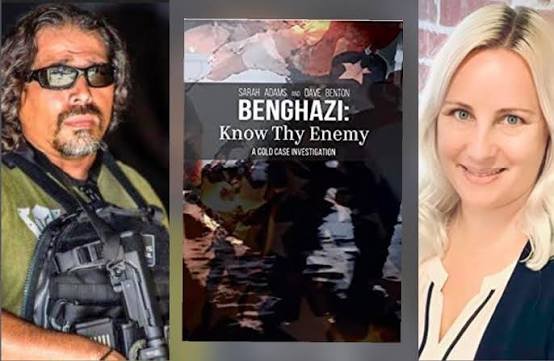
That frustration became a book. Adams is co-author of Benghazi: Know Thy Enemy, described as a cold case, open-source investigation that identified the al-Qaida operatives responsible for the 2012 attacks on the U.S. Mission Compound and CIA Annex. Her co-author is Dave “Boon” Benton, a Global Response Staff security contractor who was at the annex during the attack. Pairing an analyst with a frontline operator gave the project two lenses at once: the view from the targeting desk and the view from the fight itself.
The title borrows from one of the oldest ideas in strategy. Sun Tzu wrote, “If you know the enemy and know yourself, you need not fear the result of a hundred battles,” and the book treats that line as a working principle rather than a slogan. Instead of rehashing the political arguments that dominated headlines, the authors focus on who the attackers were, how they could be identified through open sources, and why they had not been brought to justice. Whatever a reader concludes about the findings, the method is the interesting part, because it shows how much can be assembled from public material when someone with targeting training goes looking.
The Watch Floor and Life After Government Service
Leaving the agency did not mean leaving the subject. Adams now hosts a podcast called The Watch Floor, which focuses on emerging threats, global affairs, and homeland security risks for everyday audiences. The name nods to the operations floors where analysts monitor events in real time, and the show tries to carry that urgency into a format ordinary listeners can follow. She also publishes on Substack and appears regularly on long-form interview programs, where she has the room to explain context that short television segments cannot.
This shift into media is worth understanding on its own terms. Former officers cannot reveal classified material, so the value they offer is interpretation: explaining how intelligence work operates, how threats evolve, and which signals deserve attention. Adams leans into that role by translating specialized vocabulary into plain language. The approach is not without trade-offs, since a public platform rewards clear and confident statements while real intelligence work is full of caveats, but it has made her one of the more recognizable voices in this space.
Her Recent Warnings About Al-Qaida and Afghanistan
One of her most visible recent themes is the situation in Afghanistan. In a September 2026 interview with The National News Desk marking the 25th anniversary of the September 11 attacks, Adams said al-Qaida’s next generation, including bin Laden’s sons, is operating from Afghanistan and has capabilities the original 9/11 team did not. Asked what gives the group an edge, she pointed first to finances, saying, “They’re worth billions of dollars.” Whether listeners agree with her assessment or not, the argument is clear and easy to follow: money, safe haven, and generational continuity are a dangerous combination.
She also argued that the American pullback has affected intelligence collection and shifted where the fight against terrorism could play out. That claim sits at the center of a broader policy debate. Supporters of the withdrawal emphasize the cost of long wars and the redirection of resources, while critics worry about blind spots where on-the-ground reporting once existed. Adams clearly sits with the second group, and a careful reader should treat her view as one informed perspective within a genuine disagreement rather than as the final word. Sound analysis means weighing it against other experts, official assessments, and the evolving facts.
Key Facts at a Glance
Because so much information about her circulates in fragments, a summary table helps. The entries below reflect publicly reported details from interviews, publisher biographies, and professional outlets, and they are intentionally limited to what has been consistently described. Where sources vary, such as the exact timing of her move to Congress, the table keeps the wording general.
| Topic | What Has Been Publicly Reported |
|---|---|
| Former role | CIA targeting officer and counterterrorism analyst |
| Agency units mentioned | Counterterrorism Center; Near East and Iran Operations Divisions |
| Overseas focus areas | Europe, the Middle East, North Africa, and South Asia |
| Key event | 2012 Benghazi attacks on the U.S. Mission Compound and CIA Annex |
| Government follow-up | Senior Advisor to the House Select Committee on Benghazi in the mid-2010s |
| Book | Benghazi: Know Thy Enemy, co-written with Dave “Boon” Benton |
| Media presence | Host of The Watch Floor; guest on national interview programs |
| Recent theme | Al-Qaida’s regrouping in Afghanistan and gaps in intelligence collection |
The table is a starting point, not a substitute for primary material. Readers who want more depth can listen to her long-form interviews, read the book, and compare her claims with reporting from other analysts. That habit of cross-checking is exactly what a targeting officer would recommend.
Why Her Message Resonates With Everyday Audiences
Part of the appeal is simple clarity. Many national security experts speak in acronyms and hedged phrasing, which can leave ordinary listeners feeling shut out. Adams tends to explain the reasoning behind a threat assessment, not just the conclusion, and she links global events to concerns people actually have, such as border security, terrorism at home, and the reliability of government warnings. That style makes complex subjects feel approachable without flattening them completely.
Another reason is the credibility that comes from having been there. Audiences naturally trust someone who worked on the problem from the inside, especially when the subject is as emotionally charged as Benghazi. As the old line attributed to George Santayana goes, “Those who cannot remember the past are condemned to repeat it,” and Adams frames much of her public work as an effort to keep hard lessons from fading. That framing gives her commentary a sense of purpose that goes beyond simply reacting to the news cycle.
Criticism, Caution, and How to Read Public Claims
Any public figure with strong views on national security attracts disagreement, and it would be a disservice to pretend otherwise. Former officers speaking in media settings operate under real constraints: they cannot confirm classified details, they often rely on memory and open sources, and their assessments can differ sharply from those of current officials. Some of the claims made on podcasts and interviews, particularly about specific individuals or sleeper-cell numbers, are difficult for outsiders to verify, and readers should treat such figures as assertions to be tested rather than established facts.
The responsible way to engage with this kind of content is to separate three layers: what is documented, what is expert interpretation, and what is prediction. Documented items include her career roles and her authorship. Interpretation covers how she reads events in Afghanistan or Libya. Prediction includes anything about what might happen next. Keeping those layers distinct protects you from both uncritical agreement and automatic dismissal. It is also worth noting that low-quality websites sometimes publish confident but unsupported biographies of her, so it pays to rely on interviews, publisher pages, and established outlets.
Career Lessons for Aspiring Intelligence Professionals

Her story offers practical takeaways for students and career changers. She has described the importance of working on issues you genuinely care about, including through think tanks or private firms, as a pathway toward eventual intelligence community roles. She also points out that her own route involved pivoting away from some of her early internships and discovering national security through graduate study. The message is encouraging: there is no single approved track, and curiosity plus a distinctive skill set can matter more than a perfect plan.
There is also a lesson in specialization. A deep knowledge of a particular region, language, or technical method makes a candidate memorable in a crowded field. Adams moved from regional analysis into the targeting specialty when she learned it existed, then built a reputation by being useful in difficult places. For anyone considering this path, the sensible advice is to build real expertise, stay patient with the lengthy hiring process, and develop writing and briefing skills, since explaining findings clearly is half the job.
Conclusion
The story of sarah adams cia is ultimately a story about how expertise travels. She began as an analyst with a niche regional focus, grew into a targeting officer working against terrorist networks and state adversaries, lived through the Benghazi attack, helped Congress examine what went wrong, and then turned that experience into a book and a public platform. Along the way she has become a recognizable voice on terrorism and intelligence, speaking in plain language about subjects that usually stay behind closed doors.
For readers, the smartest approach is engaged curiosity. Take her background seriously, read her work, and listen to her interviews, but also compare her views with other experts and keep a clear line between documented fact and informed opinion. Done that way, her commentary becomes a useful input to your own thinking about security, accountability, and the lessons of the past twenty-five years, which is exactly the kind of outcome a targeting officer would want from any good briefing.
Frequently Asked Questions
The questions below cover the most common things people want to know when they search for this topic. The answers draw on publicly reported information and are written to be straightforward and balanced.
Who is Sarah Adams CIA?
Adams is a former CIA targeting officer and global threat advisor with a background in counterterrorism and threat network analysis. She is known for co-authoring Benghazi: Know Thy Enemy, for her time as a senior advisor to a House committee, and for hosting the podcast The Watch Floor. When people search for sarah adams cia, they are usually trying to learn about this combination of agency experience and public commentary.
What did she do at the CIA?
She worked as a targeting officer, a specialty focused on identifying, locating, and understanding individuals and networks of intelligence interest. Public profiles mention service in the Counterterrorism Center and in the Near East and Iran Operations Divisions. The work is largely analytical and research-driven, supporting operations that aim to find, detain, and debrief important targets.
What is her book about?
Benghazi: Know Thy Enemy is a cold case, open-source investigation into the 2012 attacks on the U.S. Mission Compound and CIA Annex in Benghazi. She co-wrote it with Dave “Boon” Benton, a security contractor who was at the annex. The book focuses on identifying the attackers and on the intelligence and operational lessons that followed.
Where can I hear her speak?
She hosts The Watch Floor, which is available on YouTube and podcast platforms, and she has appeared on long-form interview shows and national news programs. She also publishes written material on Substack. Anyone exploring the sarah adams cia topic will find that her own platforms and long interviews give the most context, since short clips can strip away nuance.
Are her claims about terrorism and Afghanistan verified?
Her career credentials are widely reported, but some specific claims she makes in interviews are interpretations or estimates that outsiders cannot easily confirm. A sensible approach is to treat her views as expert opinion, compare them with other analysts and official assessments, and watch how events unfold. That keeps your understanding balanced and evidence-based.
Can someone follow a similar career path?
Yes, though it takes persistence. Adams has said she entered the field through analysis and grew into targeting after learning the specialty existed, and she encourages people to work on issues they care about while building relevant expertise. Developing regional knowledge, strong writing skills, and patience with the hiring process are all practical steps for anyone inspired by her story.


