
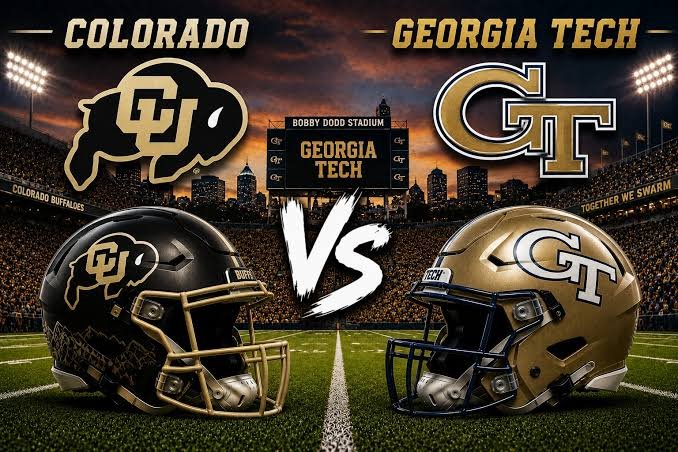

Meta Description: Colorado vs Georgia Tech explained: scores, history, key players, strategy and what both programs must fix after a tight two-game series.
Colorado vs Georgia Tech: Inside a Fresh, Fast-Growing College Football Rivalry
Some rivalries take a century to form. Others show up almost overnight, built on a couple of tight finishes, a few memorable plays and a cast of characters who make you want to watch the next one. Colorado vs Georgia Tech belongs to the second group. Two programs from different conferences, different regions and very different football identities met for the first time in the 2025 season opener, and then ran it back a year later with the stakes feeling even higher. The result is a miniature series that already has a late-game heroic run, a blocked kick, a one-point finish and a coach with a Hall of Fame résumé stalking the sideline in a stadium where he once played professional baseball and football.
If you have been trying to make sense of this matchup, you are in the right place. This guide walks through how the two teams ended up on the same schedule, what happened in each game, why the outcomes flipped, and what the series says about where both programs are headed. We will look at quarterbacks, coaching philosophies, special teams, the betting angle, the old national championship connection and the questions fans keep asking. The tone here is casual, but the details are real, so whether you are a lifelong Buffaloes believer or a Yellow Jackets loyalist, you should finish with a clearer picture of why this pairing matters.
Why This Matchup Caught Everyone’s Attention
On paper, a nonconference game between a Big 12 team and an ACC team is routine. Schedules fill up with these every September, and most of them fade from memory by Halloween. What made this one different was the personality attached to it. Colorado, under Deion Sanders, has been one of the most talked-about programs in the country since he arrived, and any game involving the Buffaloes tends to generate more headlines, more social media chatter and more national television attention than the typical early-season contest. Georgia Tech, meanwhile, arrived with a reputation as a physical, run-heavy team under Brent Key that was trying to prove it belonged in the upper half of the ACC. Put those two storylines together and you get the kind of opener that people circle on the calendar.
There is also the simple fact that nobody had seen it before. The two schools had never played each other in football until the 2025 opener, which made that first game a true unknown. There was no history to lean on, no old scores to avenge and no familiar tendencies to study from previous meetings. That blank slate is part of what makes Colorado vs Georgia Tech so fun to dissect. Every storyline is brand new, every adjustment feels fresh, and the series is being written in real time, with each season adding a major chapter rather than a footnote to a long ledger.
The matchup also arrived at a moment when both fan bases were hungry for validation. Colorado fans wanted evidence that the program could stabilize after the departure of its most celebrated stars, while Georgia Tech supporters wanted proof that their team could beat a heavily scrutinized opponent on a big stage. Early-season games are often treated as tune-ups, but these two felt like referendums. A win meant momentum and a narrative boost; a loss meant weeks of questions. That pressure is exactly why the finishes have been so tense.
A Brief Look at the Two Programs
Before diving into the games themselves, it helps to understand who these teams are. Colorado is a program with a proud history, including a national championship in the early 1990 era, but it has also endured long stretches of struggle. Deion Sanders took over and immediately turned the Buffaloes into a national conversation piece, bringing in a wave of transfers, a surge in attendance and a level of media attention rarely seen for a program in Boulder. The 2024 campaign was a high-water mark. Then came a hard reality check: Colorado went just 3-9 overall and 1-8 in Big 12 play in 2025, a significant step back after losing stars such as Travis Hunter and Shedeur Sanders to the professional ranks.
Georgia Tech has a different personality. The Yellow Jackets play in the heart of Atlanta, a city with deep football talent and a recruiting pipeline that every major program wants to tap. Under Brent Key, the identity has been clear: run the ball, control tempo, win the line of scrimmage and make opponents uncomfortable. The program has historic flair too, with an option-based tradition that shaped college football for decades, and the modern version blends that toughness with more balanced offense than the old days. Bobby Dodd Stadium, sitting just outside downtown, remains one of the more distinctive homes in the sport thanks to its skyline backdrop.
What makes the comparison interesting is how the two programs get their talent. Colorado leans heavily on the transfer portal and high-profile personalities to build rosters quickly, which creates both a high ceiling and real volatility. Georgia Tech mixes portal additions with homegrown development and a strong recruiting base in the Southeast, which tends to produce steadier, more physical teams. Neither approach is inherently better, but they produce different kinds of football, and that contrast is baked into the DNA of this series.
The 2025 Opener in Boulder
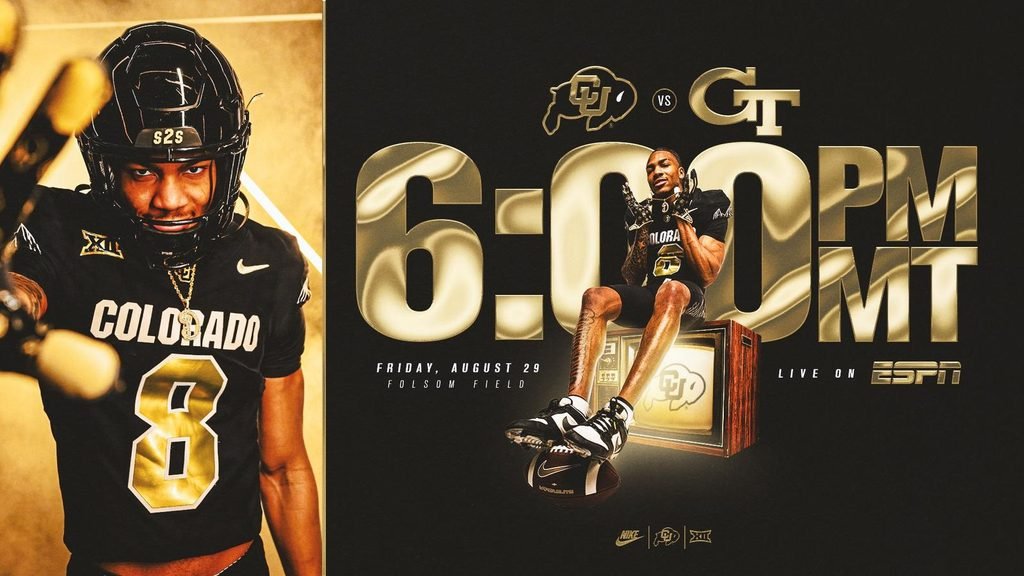
The first chapter was written on a Friday night in Boulder. Georgia Tech overcame a turnover-filled start to beat Colorado 27-20, with Haynes King faking a pitch and sprinting 45 yards for a touchdown with 1:07 remaining. It was a classic opener in the sense that it was sloppy in spots, brilliant in others and decided by one decisive moment. Colorado had the home crowd, the hype and a new quarterback in Kaidon Salter making his debut, but the Yellow Jackets had a scheme that Colorado simply could not stop consistently.
The statistics tell the story clearly. Georgia Tech outgained Colorado 463 to 305 and rushed for 320 yards, which is the kind of number that usually means one team controlled the game physically even if the scoreboard stayed close. Colorado deserves credit for hanging around, though. Salter scored on a 7-yard scramble in the fourth quarter to cut the deficit to a single point, and he threw for 159 yards and a touchdown in his Colorado debut. Linebacker Martavius French also made timely plays, recovering a pair of fumbles that kept the Buffaloes within striking distance after an early-game turnover problem threatened to blow things open.
In the postgame conversation, Deion Sanders was characteristically direct. He pushed back on the idea that the game had been a blowout by saying, “It’s not like we had our butts kicked,” and then credited Georgia Tech’s ability to run the football as the real separator. That assessment was fair. Colorado had chances, but when the game was on the line, Tech’s ground attack was the more reliable weapon. It also set the table for everything that followed, because the clear lesson for Colorado was that stopping the run had to become priority number one before the teams met again.
Haynes King and the Ground Game That Broke Colorado’s Back
If you want one player to explain the 2025 result, it is Haynes King. The Georgia Tech quarterback finished with 156 rushing yards and three touchdowns, while also throwing for 143 yards. That stat line is the modern dual-threat quarterback in a nutshell, but it understates how much stress King placed on the Colorado defense. Every read-option look forced linebackers and safeties to hesitate, and hesitation against a team like Georgia Tech is fatal. By the time a defender decided who to tackle, the ball was already past the line of scrimmage.
The winning play was a perfect example. On the final drive, King carried the ball four times in a five-play sequence, and the last one was the fake-pitch keeper that sealed the game. It was not a trick play so much as a well-practiced concept executed against a defense that had been worn down for nearly sixty minutes. That is how run-first offenses win close games: they do not need a miracle, they just keep making you tackle the same threat until you break. Colorado’s defenders were gassed, and the Yellow Jackets knew exactly where the cracks were.
The bigger takeaway is that Georgia Tech’s offensive line deserves a share of the credit. A quarterback only gets 156 rushing yards when the blockers create lanes and the scheme puts defenders in conflict. The Yellow Jackets paired physical blocking with smart play design, and the rushing total of 320 yards reflected a group effort. For Colorado, that film was a wake-up call. Fixing it would require better tackling, better gap discipline and a defensive coordinator who understood how to attack Tech’s tendencies, which is a big reason why the Buffaloes’ staff changes mattered going into the rematch.
The 2026 Rematch at Bobby Dodd Stadium
Fast forward a year, and the second game moved to Atlanta. It was the opening Thursday of the 2026 season, an 8 p.m. kickoff on ESPN, and it carried an extra layer of emotion because Deion Sanders was returning to the city where he built a distinguished career with the Falcons and the Braves. The setting was perfect for a rematch: a loud crowd, a skyline glowing beyond the stands and two teams that knew each other’s playbooks better than they ever had before. Georgia Tech entered as a modest favorite of roughly a touchdown, which reflected their win the previous year and their home-field edge.
What unfolded was a defensive slugfest that rewarded patience. At halftime Georgia Tech led 10-7, and neither offense had found a real rhythm. Colorado’s passing game was sputtering early, with quarterback Julian Lewis completing just six of his first fourteen attempts for 41 yards. Georgia Tech had its moments but kept stalling in key spots, and a blocked field-goal attempt from each side made it clear that special teams could decide the night. The tempo was slower than the 2025 opener, and every possession felt heavy because points were so scarce.
Then came the finish. Colorado took a 14-13 lead on a 20-yard pass from Julian Lewis to tight end Charlie Williams with 37 seconds left. Georgia Tech still had time and moved the ball into field-goal range, but the drive ended in the most dramatic way possible. Cornerback Boo Carter blocked the attempt, ending the game and sending the Buffaloes fans in the southeast corner of the stadium into a frenzy. It was a perfectly cruel and perfectly thrilling ending, and it instantly turned Colorado vs Georgia Tech into a series that felt genuinely balanced, with each team owning a one-possession victory over the other.
How Colorado Flipped the Script
The most interesting question about the rematch is not who won but how the outcome reversed so completely. In 2025, Georgia Tech rolled up 320 rushing yards and nearly 500 total yards. In 2026, the Yellow Jackets managed just 13 points. The change started with Colorado’s defensive approach. Georgia Tech head coach Brent Key had said before the game that Colorado defensive coordinator Chris Marve “has had success against us,” a quiet acknowledgment that Marve understood the Yellow Jackets’ scheme and had a plan to disrupt it. That comment turned out to be a bit of foreshadowing.
Preseason commentary had also suggested that the key to the game was keeping Georgia Tech’s rushing total under 200 yards. Colorado did more than that. By containing the edges, tackling in space and forcing Georgia Tech to win through the air, the Buffaloes took away the foundation of the Yellow Jackets’ offense. Quarterback Alberto Mendoza was efficient, completing 17 of 23 passes for 237 yards, but he did not score a touchdown through the air, and Georgia Tech’s rushing attack was nowhere near its 2025 level. The offense moved between the twenties and then bogged down when it mattered most.
It is also worth noting that Colorado’s offense did not win this game with fireworks. Lewis finished 14 of 27 for 124 yards and one touchdown, which is hardly a headline-grabbing line. But the Buffaloes ran the ball with enough efficiency, with Micah Welch scoring a touchdown and Damian Henderson II averaging more than five yards per carry, to keep the chains moving and the defense rested. The lesson is that Colorado won through discipline, not flash, which is a meaningful shift from the identity many people associate with the program.
Quarterback Duel: Julian Lewis vs Alberto Mendoza
Quarterback play often defines these games, and the contrast between Colorado’s Julian Lewis and Georgia Tech’s Alberto Mendoza was fascinating. Lewis entered 2026 as a second-year player who had served as a backup the previous season and had limited game experience. He earned the starting job through a competitive offseason battle, and the early expectation was that his ability to protect the football would matter more than any single highlight throw. In that sense, his performance against Georgia Tech was a solid, if unspectacular, validation.
Mendoza, by comparison, produced the more impressive stat line. His completion rate of nearly 74 percent and 10.3 yards per attempt show a quarterback who was comfortable pushing the ball downfield and finding open receivers. The problem for Georgia Tech was finishing drives. Moving the ball is one thing; turning yardage into points is another, and the Yellow Jackets left too many opportunities on the table. That is a classic pattern in close games: the team with the better passing efficiency does not always win if it cannot convert in the red zone or if special teams betray it.
What the matchup revealed is that both quarterbacks are still developing and both programs are building around them. Lewis showed poise in the biggest moment, delivering a clutch touchdown strike when Colorado needed it, which is the kind of play that builds confidence. Mendoza showed that Georgia Tech’s offense can function without relying solely on a running quarterback, which could make the Yellow Jackets more versatile in the long run. If you are tracking the future of this series, the progress of these two players will be one of the biggest factors.
Coaching Chess: Deion Sanders and Brent Key
Behind the quarterbacks, the coaches shape the story. Deion Sanders is among the most recognizable figures in sports, and his presence on a sideline guarantees attention. His approach blends motivational energy with a belief in culture and competition, and he has often emphasized that his teams must be tough enough to win ugly games, not just pretty ones. The 2026 victory in Atlanta fit that narrative perfectly, because it was gritty, tense and decided by a blocked kick rather than a highlight-reel offense.
Brent Key, on the other hand, represents the stability and physicality that Georgia Tech has embraced since he took over. His teams are built on toughness, discipline and a willingness to lean on the run game even when defenses know it is coming. That is a philosophy that can overwhelm opponents who are not physically prepared, as the 2025 game demonstrated. But it can also be exposed when a defense matches the physicality and forces the offense out of its comfort zone, which is what Colorado managed in the rematch.
The chess match between the staffs is part of what makes this series compelling. Each side adjusted after the first game, and the second game became a battle of preparation. Colorado’s defensive staff built a plan to slow the run, while Georgia Tech’s coaches tried to counter by leaning on the pass. Neither side was able to fully dominate, and the tight final score reflects that balance. Expect future meetings, if there are any, to feature even more layered game plans as both staffs study what worked and what did not.
Defense and Special Teams: Where the Game Was Really Won
It is tempting to focus on quarterbacks and highlights, but the most important units in the 2026 game were the defenses and the special teams. Colorado’s defense held Georgia Tech to 13 points, which is a major accomplishment against a team that scored 27 the year before. The Buffaloes limited explosive plays, tackled consistently and forced the Yellow Jackets to string together long drives. That is exactly the formula for beating an offense that thrives on big plays and tempo.
Special teams, meanwhile, decided the final result. Two blocked field-goal attempts in one game is unusual, and the second one ended the game in dramatic fashion. Boo Carter’s block was the culmination of a night where Colorado’s special teams unit played with energy and precision. Coaches often say that special teams are the third phase of the game, and this was a perfect illustration. A single missed assignment or a slightly low kick can swing a contest, and Colorado capitalized on the margin.
There is a broader lesson here for fans who like to evaluate teams on offensive numbers alone. Georgia Tech actually outperformed Colorado in total passing efficiency in 2026, and yet they lost. That is because football outcomes depend on situational execution: red-zone conversions, turnover margin, penalties and kicking. When teams are evenly matched, those small details tend to be the difference. Colorado vs Georgia Tech has shown that twice, with the 2025 game turning on explosive plays and the 2026 game turning on special teams.
Head-to-Head Snapshot: Numbers and Key Moments
Sometimes it is easiest to see a series laid out side by side. The table below summarizes the two meetings so far, including the setting, the final score and the moment that defined each game. It is a quick way to see how dramatically the narrative shifted from one year to the next while the margin stayed razor thin.
| Category | 2025 Meeting | 2026 Meeting |
|---|---|---|
| Date | August 29, 2025 | September 3, 2026 |
| Location | Folsom Field, Boulder | Bobby Dodd Stadium, Atlanta |
| Winner | Georgia Tech | Colorado |
| Final Score | Georgia Tech 27, Colorado 20 | Colorado 14, Georgia Tech 13 |
| Margin | 7 points | 1 point |
| Defining Moment | Haynes King’s 45-yard touchdown run with 1:07 left | Boo Carter’s blocked field goal on the final play |
| Standout Offensive Performer | Haynes King, 156 rushing yards and three touchdowns | Alberto Mendoza, 237 passing yards on 17-of-23 |
| Key Statistic | Georgia Tech rushed for 320 yards | Colorado held Georgia Tech to 13 points |
What jumps out is how symmetrical the series is. Each team has one win, each win was decided in the final minutes and each game was played on the loser’s home field. That kind of balance is rare in a brand-new matchup, and it makes the trajectory feel genuinely uncertain. It also means that any future meeting would carry real tiebreaker energy, since both teams will be eager to claim the series lead.
The table also highlights the contrast in styles. The first game was a showcase of rushing dominance, while the second was a showcase of defensive resilience. If you were asked to describe the series in one sentence, you could say that it has been a conversation between a team that wants to run the ball and a team that has learned how to stop it. That kind of tactical back-and-forth is what keeps a matchup interesting even when the teams are not meeting for a conference title.
The 1990 Connection That Ties the Schools Together
Even though the teams had never met on the field before 2025, they share a notable piece of history. Both programs were named national champions after the 1990 season, in a year when the title was split. Colorado and Georgia Tech finished on top in different polls, which means that fans of each school can claim a championship from the same year. It is a fun bit of trivia that gave the 2025 opener extra flavor, especially because Deion Sanders has long been associated with that era of college football.
That shared history adds a layer of friendly irony to the series. Two programs that once stood at the top of the sport together are now dueling in September openers, both trying to reclaim some of that old glory. For Colorado, the 1990 title represents a high point that the program has been chasing ever since. For Georgia Tech, it represents a proud era that still shapes how the university sees itself, and it is a reminder that the Yellow Jackets have been a national force before.
Fans who appreciate college football lore often point to connections like this as the reason rivalries grow. Nothing manufactures real animosity quite like genuine competition, but shared history gives a series a foundation. When Colorado and Georgia Tech meet, there is an unspoken acknowledgment that both schools have been here before, standing at the top of the sport. That sense of mutual legacy makes the matchup feel bigger than a nonconference date.
Betting Trends and Prediction Angles

Whenever a high-profile game arrives, betting markets get busy, and this one was no exception. Georgia Tech was installed as the favorite for the 2026 rematch, with the spread hovering around a touchdown. Colorado’s moneyline sat at plus 215, which signaled that bookmakers viewed the Yellow Jackets as the likelier winner but still saw enough risk to price Colorado as a live underdog. Preview coverage noted that Georgia Tech had both won and covered in the 2025 game, which fed into the confidence behind the line.
Analysts offered a range of predictions. Some focused on the Yellow Jackets’ ability to run the ball and control the clock, while others pointed out that Colorado’s defense had a new coordinator and a plan to challenge the offensive line. One local preview even predicted a one-point Colorado win, which turned out to be eerily close to the real result. It is a good reminder that previews are educated guesses, not guarantees, and that tight matchups can swing on a single play.
For bettors and casual fans alike, the main lesson is that point spreads in early-season games are built on limited information. Teams change, rosters turn over and coaching adjustments can alter the outlook dramatically. The 2025 game showed that a run-heavy team can cover easily, while the 2026 game showed that a defense with a plan can flip the script. If you are evaluating a future game in this series, it pays to look beyond last year’s result and examine how each roster has changed and how each staff has adapted.
Recruiting, Transfers and Brand Power
The off-field side of Colorado vs Georgia Tech is almost as interesting as what happens between the lines. Colorado has built much of its modern identity on a high-visibility brand, and every time the Buffaloes play on national television, it reinforces that profile. Games against respected opponents like Georgia Tech give the program a chance to show recruits that it can compete with traditional powers. A win in Atlanta, in front of a skeptical crowd, is the kind of result that gets noticed by prospects and transfer targets.
Georgia Tech has its own recruiting story. Atlanta is one of the richest football talent regions in the country, and the Yellow Jackets compete with the biggest programs in the Southeast for local players. Big games against nationally known opponents help the program stay in the conversation, even when the result does not go their way. Fans often underestimate how much a competitive showing in a high-profile game can help with recruiting, especially when it demonstrates toughness and a clear identity.
The transfer portal has made these dynamics even more important. Players now move freely between programs, and a team that looks competitive on a big stage can attract talent quickly. Both Colorado and Georgia Tech rely on the portal to supplement their rosters, which means each game doubles as an advertisement. If the series continues, expect both staffs to pay close attention to how the matchups influence the portal market, because perception can shape roster building almost as much as wins and losses.
What Each Team Must Fix Going Forward
For Georgia Tech, the clear priority is finishing drives. The Yellow Jackets moved the ball well in the rematch, with Mendoza finding open receivers and keeping the offense on schedule, but they could not turn those yards into enough points. Red-zone efficiency, short-yardage execution and special-teams reliability will determine whether they can bounce back from a heartbreaking loss. The team also needs to rediscover the physical rushing attack that made them so dangerous in 2025, because a balanced offense is much harder to defend.
For Colorado, the challenge is sustaining the progress shown in the win. The Buffaloes were not dominant on offense, and the passing game still needs to become more consistent. Lewis completed fewer than 52 percent of his throws, which is a number that will not be good enough against stronger opponents. Colorado also needs to prove that the defensive improvement is real rather than a one-night performance, especially against offenses with different strengths than Georgia Tech’s.
The shared theme is that both teams have identifiable, fixable weaknesses. That is encouraging for fans, because it suggests that the ceiling for each program is still ahead of them. The rematch showed that both rosters have talent and coaching depth, and the margins in these games are so small that modest improvements could produce much better results. Whether the series continues or not, the lessons from these two games will shape each team’s season.
The Fan Experience and Atmosphere
Game day atmosphere is a huge part of why this matchup feels special. In Boulder, the opener had the mountain backdrop, the crowd energy and the pageantry that comes with a Colorado home game. There was also a notable absence, as Ralphie VI, the live buffalo mascot, had retired just before the game and was missing from the field. It was a small detail, but it reminded everyone that traditions evolve and that every season brings changes, even to the most iconic symbols.
In Atlanta, the setting was equally memorable. Bobby Dodd Stadium sits against the city skyline, and a Thursday night kickoff under the lights gave the crowd an electric edge. Colorado’s traveling fans gathered in the southeast corner of the stadium, and their celebration after the final block was one of the loudest moments of the night. That image, a small pocket of Buffaloes supporters erupting while thousands of Georgia Tech fans stood in stunned silence, perfectly captures the emotional swing of a one-point game.
For fans who attend games, the series offers a rare chance to see two distinct football cultures collide. Colorado brings a national spotlight and a fan base that travels with enthusiasm. Georgia Tech brings tradition, a passionate home crowd and the energy of a major city. When those two worlds meet, the result is an environment that feels bigger than a typical early-season game, and it is part of why both schools should be glad this series exists.
Conclusion
Two games in, the story of Colorado vs Georgia Tech is already richer than many rivalries that have been running for decades. The first meeting showcased Georgia Tech’s ground game and Haynes King’s late heroics, while the second showcased Colorado’s defensive resolve and a special-teams play that ended the night in spectacular fashion. Each team owns a win, each win was decided in the final minutes and each outcome forced the loser to rethink its approach.
Beyond the scores, the series has highlighted what makes college football compelling: contrasting styles, high-profile coaches, shared history and the constant possibility that a single play can change everything. Colorado and Georgia Tech share a split national title from 1990, and now they share a pair of thrilling finishes that tied the programs together in a new way. Whether or not they meet again soon, the first two chapters have given fans plenty to remember and plenty to debate. If a third game arrives, expect another tight, tactical and emotionally charged battle.
Frequently Asked Questions About Colorado vs Georgia Tech
The questions below cover the most common things fans ask when they search for this matchup. They are written to be quick, clear and practical, so you can get the facts without wading through long recaps. Each answer draws on what actually happened in the two games played so far.
If you are new to the series, think of these answers as a fast catch-up guide. The history is short, but it is packed with detail, and a few key facts will help you follow any future conversation about the teams. Here are the questions people ask most often.
Who has won more games in the Colorado vs Georgia Tech series?
The series is currently tied at one win apiece. Georgia Tech won the first meeting in Boulder in 2025 by a score of 27-20, and Colorado won the rematch in Atlanta in 2026 by a score of 14-13. Because the two programs had never faced each other before 2025, there is no earlier history to add to the tally, which makes the series perfectly even and gives any future game extra weight.
What was the score of the most recent Colorado vs Georgia Tech game?
The most recent game was played on September 3, 2026, at Bobby Dodd Stadium in Atlanta, and Colorado won 14-13. Georgia Tech led 10-7 at halftime, but Julian Lewis threw a 20-yard touchdown pass to tight end Charlie Williams with 37 seconds left to give the Buffaloes the lead. Boo Carter then blocked Georgia Tech’s final field-goal attempt to seal the victory.
Who were the key players in the two games?
In 2025, Georgia Tech quarterback Haynes King was the star, running for 156 yards and three touchdowns, including the 45-yard game-winner. Colorado’s Kaidon Salter also played well in his debut, throwing for 159 yards and a touchdown and scoring on a late scramble. In 2026, Julian Lewis delivered the clutch touchdown pass for Colorado, Alberto Mendoza passed for 237 yards for Georgia Tech, and Boo Carter made the biggest play of the night with the blocked kick.
Why did Georgia Tech’s offense struggle in the rematch?
Georgia Tech’s passing game was efficient, but the run game that dominated in 2025 was neutralized. Colorado’s defense, led by coordinator Chris Marve, focused on containing the edges and tackling in space, which forced the Yellow Jackets to depend on short and medium throws. The offense moved the ball but failed to finish drives, and two blocked field-goal situations in the game’s late stages hurt the team’s chances. In a matchup this tight, those missed opportunities made the difference.
Will Colorado and Georgia Tech play again?
As of now, there is no confirmed third meeting that this article can point to, so fans should check official school schedules for the latest information. Given how entertaining the first two games were and the interest they generated, many supporters would like to see the series continue. If it does, expect a tight contest, since both teams have shown they can win and both have clear areas to improve before the next showdown.
How did the 1990 national championship connect Colorado and Georgia Tech?
Both schools were recognized as national champions after the 1990 season, when the title was split between two different polls. That means each program can proudly point to the same year as one of its greatest achievements. The shared championship adds a layer of historical flavor to Colorado vs Georgia Tech, and it gives fans of both teams something in common even though the schools had never played each other until 2025.


