Meta Description: Clay Matthews career guide: Packers glory, Super Bowl XLV, family legacy, Hall of Fame debate and key stats for the legendary pass rusher.
Clay Matthews: The Long-Haired Pass Rusher Who Defined an Era in Green Bay
Every generation of football fans gets a few defenders who make quarterbacks nervous just by lining up. For a stretch of roughly ten seasons, Clay Matthews was one of those players. He had the flowing blond hair, the relentless motor and a knack for showing up in the backfield at exactly the moment a play was about to be born. Packers fans still talk about him the way people talk about a favorite concert: the volume, the energy, the feeling that something loud and memorable was about to happen on every snap. When he was right, Green Bay’s defense looked like it had an extra player on the field.
This guide takes a full, friendly look at his story. We will cover the football family that raised him, his college days at USC, the draft-day gamble that brought him to Wisconsin, the Super Bowl run that cemented his reputation, and the quieter final chapters in Los Angeles. Along the way we will look at his style of play, the numbers that back up the legend, the Hall of Fame debate and what his career teaches young pass rushers today. Whether you are a lifelong Packers loyalist or someone who just wants to understand why the name still gets such a reaction, there is plenty here to enjoy.
Why the Name Still Carries So Much Weight
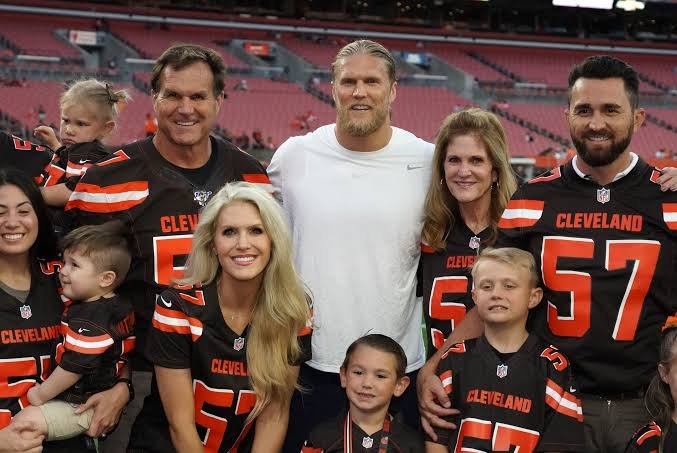
Football is a sport full of famous surnames, but few carry the layered meaning that Matthews does. The family has produced linebackers, offensive linemen and a Pro Football Hall of Famer, and the name pops up in broadcasts across multiple decades. When a casual fan hears it, they usually picture one of several players depending on their age and favorite team. For anyone who watched the NFL between 2009 and 2018, though, the picture is clear: a streaky-haired outside linebacker in green and gold, hands outstretched, hunting the quarterback.
What gives the name staying power is the combination of production and presence. Matthews finished his career with 91.5 sacks, 519 tackles, 200 quarterback hits and 17 forced fumbles, according to NFL.com’s retirement coverage. Those numbers are impressive on their own, but what people remember is the way he played: with a ferocity that made every pressure feel like an event. He was not a quiet, technical edge rusher who won with subtle hand fighting. He was a spectacle, and the best spectacles tend to linger in memory long after the box scores fade.
There is also a human element that keeps fans invested. He came from a family with enormous expectations, and he handled the weight of that legacy with a sense of humor and a lot of hard work. He did not simply inherit a career; he built one, snap by snap, starting from a college program where he began as a walk-on. That journey from unproven prospect to Super Bowl champion is exactly the kind of arc people love, and it is why discussions about his career still feel warm rather than clinical.
Growing Up in a Football Dynasty
To understand the player, you have to understand the household. Matthews was born on May 14, 1986, into what is often called one of the great football families in American sports. His father, Clay Matthews Jr., was a legendary linebacker who spent nearly two decades in the league, most famously with the Cleveland Browns, and his grandfather, Clay Matthews Sr., played professionally for the San Francisco 49ers in the 1950s. His uncle, Bruce Matthews, became a Hall of Fame offensive lineman, and his brother Casey followed the family path as an NFL linebacker. With that kind of lineage, football was less a hobby than a native language.
You might assume that a family like that would push a kid into the sport from the cradle, but the early years were more nuanced. He grew up in Southern California, played multiple sports and was not initially the headline recruit people imagine. He was reportedly a late bloomer physically, which meant college scouts did not rush to hand him a scholarship. That detail matters, because it helped shape the chip on his shoulder. Being the son of an NFL legend can open doors, but it also invites comparisons, and he spent his formative years proving that his name was not doing the work for him.
The family influence shows up in the way he talked about the game, too. He understood film, leverage and the mental side of pass rushing at an unusually young age because he had grown up around people who dissected those things at the dinner table. When he reached the pros, veteran teammates noticed that he carried himself like someone who had already absorbed the culture of the league. It is a quiet advantage, the kind that does not show up in combine drills but absolutely shows up in how quickly a young player learns to read an offensive tackle’s stance.
From Walk-On to USC Standout
College football is where Matthews first earned real attention. He attended USC, a program known for churning out NFL talent, and arrived without the fanfare that usually follows five-star prospects. He joined the Trojans as a walk-on, which means he had to earn everything: a scholarship, playing time and the respect of coaches and teammates. That path is rare for a future first-round pick, and it gives his story a texture that straight-line prospects rarely have. He was competing for scraps of attention in a stacked linebacker room, and he made himself impossible to ignore.
During his time in Los Angeles, he became part of a dominant era for the program. The Trojans won multiple Pac-10 championships during his career, and he was part of the group that kept USC in the national conversation. He developed into a versatile linebacker who could rush the passer, drop into coverage and play special teams, which are exactly the skills pro scouts like to see. His senior season in particular put him on draft boards, and by the time he left campus, he was widely seen as a first-round talent with a high floor and a very high ceiling.
What stood out to evaluators was his instinct. Speed and strength can be measured, but the ability to sense where a play is going and to arrive at the ball with violence is harder to quantify. Matthews had it. Even with a modest college sack total compared with some top pass rushers, scouts liked the way he transitioned from reading the offense to attacking it. That blend of intelligence and aggression would become the hallmark of his professional career, and USC was where it first took shape.
The Trade Up and a Rookie Season to Remember
Draft night in 2009 gave Packers fans one of the more memorable moments of the era. Green Bay saw a pass rusher it loved and decided not to wait. The team traded significant assets to the New England Patriots to move up to the 26th overall pick and select Matthews. Trading up in the first round is always a gamble, because you are giving away future picks for a player who has not yet taken a pro snap. The Packers’ front office clearly believed the payoff would be worth it.
It paid off almost immediately. As a rookie, he set a Packers rookie record with 10 sacks, adding seven pass deflections and three fumble recoveries. Those numbers are remarkable for any first-year player, especially one adjusting to a new defensive scheme under coordinator Dom Capers, whose 3-4 system was built to unleash outside linebackers as disruptive playmakers. The fit was almost too perfect. Matthews had the athletic traits, the football IQ and the mentality to thrive in a role that demanded constant pressure.
The rookie season also introduced the national audience to his on-field personality. He celebrated sacks with energy, played with visible joy and seemed to genuinely enjoy making life miserable for opposing quarterbacks. That authenticity helped him connect with fans quickly. In a league where players are often managed and filtered, he came across as someone who loved the game and was not afraid to show it. By the end of that first year, he had earned a Pro Bowl nod and established himself as a cornerstone of the Packers’ defensive future.
The 2010 Season and the Super Bowl XLV Run
If the rookie year was the introduction, 2010 was the headline. Matthews raised his performance across the board, finishing with a career-high 13.5 sacks and helping the Packers fight through injuries and a tight playoff race. Green Bay entered the postseason as a sixth seed, which meant no home-field advantage and a road-heavy path to the title. Instead of being a limitation, that challenge seemed to sharpen the team. Matthews led the charge, adding 3.5 sacks in the playoffs on the way to a Super Bowl title.
The championship game itself, Super Bowl XLV against the Pittsburgh Steelers, gave Matthews one of his signature moments. In the fourth quarter, with Pittsburgh trying to rally, he got to Steelers running back Rashard Mendenhall and forced a fumble that the Packers recovered, a turnover that helped Green Bay hold on for a 31-25 win. It was the type of play that does not always show up in the traditional sack column but swings a championship. Ask a Packers fan about that sequence, and you will likely get an enthusiastic, detailed retelling.
The 2010 season also elevated his profile beyond Wisconsin. He finished near the top of Defensive Player of the Year conversations and became one of the most recognizable defenders in the league. The hair, the production and the title all combined into a brand that fans identified immediately. For many viewers, that season is the definitive image of Matthews: sprinting off the edge, arms wide, a championship team behind him and a stadium full of people who believed the best was still coming.
The Playing Style That Made Him Special
Great pass rushers tend to have a signature, and Matthews had several. His first and most obvious trait was explosiveness off the snap. He fired out of his stance with a burst that made offensive tackles feel late before the play had even developed. Combined with long arms and strong hands, that first step allowed him to threaten the outside shoulder of a blocker, forcing the tackle to overset and opening up inside counters. Few edge rushers could so consistently make blockers worry about two moves at once.
His second trait was relentlessness. Many pass rushers win with one or two go-to moves and then fade when a play breaks down. He kept working through the whistle, which led to a lot of cleanup sacks and hurries that never showed up in the official count but still wrecked drives. This motor was a big reason he finished with 200 quarterback hits, a number that speaks to how often he was in the quarterback’s face even when he did not get the sack. Defensive coaches love players like that because they raise the standard for everyone around them.
Finally, he was surprisingly versatile. Under Capers, he lined up on both sides of the formation, dropped into coverage when needed and eventually spent time at inside linebacker later in his career. That flexibility made him harder to game-plan against, because offenses could not always predict where he would be. Pass rush is partly about talent and partly about disguise, and Matthews gave defensive coordinators a wide palette to paint with. It is one reason his impact felt larger than his sack totals alone suggest.
Peak Years, Pro Bowls and the Packers Sack Record
After the title run, Matthews continued to rack up honors. He made the Pro Bowl in his first four seasons and later earned two more selections, finishing with six in total. Only one of those seasons ended with a first-team All-Pro nod, but the consistency of his production across multiple years is what defines his case as an elite player. He had four double-digit sack seasons in his career, a stat that places him in a select group of pass rushers who reached that mark more than once.
In Green Bay, those numbers added up to a franchise milestone. Matthews stands as the Packers’ official career leader in sacks, with 83.5, a record that counts only from 1982 forward, when sacks became an official statistic. It is worth keeping that caveat in mind, because earlier eras of Packers football are not fully captured in the record book. Still, the title of franchise leader is a meaningful honor in a franchise with a history as long and distinguished as Green Bay’s, and it reflects the sustained impact he had over a decade.
Individual accolades only tell part of the story, though. Matthews was the face of a defense that, during his peak, paired pressure with turnovers and gave a high-powered offense a reliable partner. The Packers of that era were built around Aaron Rodgers and a roster that routinely made the playoffs, and Matthews was the defensive centerpiece that balanced the equation. When people talk about the golden stretch of Packers football in the 2010s, his name is part of the core vocabulary.
Career Numbers at a Glance
Sometimes the easiest way to appreciate a career is to see the numbers side by side. The table below pulls together the major milestones from his time in the NFL, organized so you can scan the highlights quickly. It is not a replacement for a full statistical page, but it captures the headline achievements that define his professional resume.
| Category | Detail |
|---|---|
| Born | May 14, 1986 |
| College | USC |
| Draft | 2009, first round, 26th overall (Green Bay Packers) |
| Teams | Green Bay Packers (2009–2018), Los Angeles Rams (2019) |
| Pro Bowls | Six selections |
| All-Pro | One first-team selection |
| Super Bowl | Champion, Super Bowl XLV (2010 season) |
| Career sacks | 91.5 (83.5 with the Packers) |
| Career tackles | 519 combined |
| Quarterback hits | 200 |
| Forced fumbles | 17 |
| Pass deflections | 43 |
| Interceptions | Six |
| Rookie sacks | 10 (Packers rookie record at the time) |
| Best sack season | 13.5 (2010) |
A few things jump out when you study this snapshot. First, the numbers are balanced. He was not just a sack artist; he produced hits, forced fumbles and pass deflections, which signals a complete defender. Second, the total of 91.5 sacks over eleven seasons is a strong figure for a player who also spent time inside and dealt with injuries. It is the sort of résumé that makes people say “very good for a long time” rather than “great for a short time,” and that distinction matters in Hall of Fame debates.
Third, the table shows how concentrated his best production was in Green Bay. The overwhelming majority of his sacks came as a Packer, and his one season with the Rams provides a coda rather than a second act. That makes his legacy easy to summarize: he is a Packers legend with a brief postscript elsewhere. Fans tend to appreciate that kind of clarity, because it keeps the story tied to one team, one era and one memorable set of seasons.
Injuries, Position Changes and the Late-Career Shift
No football career is a straight line, and his featured a few bumps. Over the years, he dealt with hamstring issues, a thumb injury and other nagging problems that cost him games and sometimes limited his effectiveness. In a sport where availability is half the battle, those absences made it harder to string together the kind of dominant seasons he produced early on. The injuries did not erase his impact, but they did make the later years feel more uneven than the early ones.
The Packers also made a notable schematic adjustment. In 2014, they moved Matthews to inside linebacker for a stretch, hoping to take advantage of his instincts and ability to attack the line of scrimmage from a new angle. It was an unusual move for a player so closely associated with the edge, and it showed how much the coaching staff valued his football IQ. He played well enough in that role to earn a Pro Bowl berth, which says plenty about his adaptability, though many fans still associated him most strongly with the outside rush.
The shift was also a sign of how pass-rushing careers evolve. As explosive athletes age, they often lose a fraction of the burst that made them special, and smart teams look for ways to keep them productive. Moving inside allowed Matthews to rely more on instincts and anticipation while still contributing as a blitzer. Looking back, the experiment feels like a thoughtful attempt to extend his prime, and it contributed to the longevity that ultimately gave him his strong career totals.
The Rams Chapter and the Quiet Exit
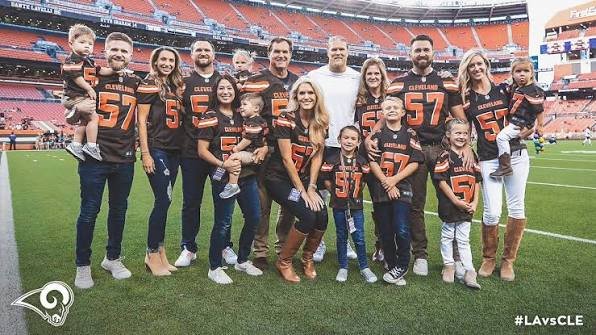
After 2018, the Packers and Matthews parted ways, and he headed to his hometown Los Angeles Rams on a two-year deal. For a player raised in Southern California, the move carried obvious emotional appeal, and it came at a time when the Rams were still riding the momentum of a recent Super Bowl appearance. He joined a defense full of talent and brought veteran leadership to a team hoping to extend its window. In 2019, he contributed as a pass rusher and gave the Rams a recognizable presence off the edge.
The partnership did not last as long as the contract suggested. The Rams released him after a single season, a decision that surprised him. In later interviews, he said the move caught him off guard, and the following offseason featured a mix of speculation and frustration, including reports of a payment dispute tied to the Rams’ cap situation and rumors about interest from other teams. A potential reunion with the Packers was also floated, partly because Joe Barry, who had coached him in Los Angeles, became Green Bay’s defensive coordinator, but it never materialized.
Eventually, he made peace with the ending. Years after his last game, he told reporters, “My playing days are over,” a simple statement that closed the book on a distinguished run. He also expressed satisfaction with how his career unfolded, which is a healthy note for a player who spent more than a decade at the top of a demanding sport. Not every great career ends with a parade, and his exit was quiet, but it was dignified and honest, which fits the way he carried himself throughout.
The Matthews Family Tree in a Table
Because the family is such a large part of the story, it helps to map the football branches clearly. The table below summarizes the major figures and how they connect, from the first Matthews to wear an NFL uniform to the modern relatives still active in the game. It is a handy reference when conversations about the surname get confusing.
| Family member | Relationship | Position | Notable detail |
|---|---|---|---|
| Clay Sr. | Grandfather | Linebacker | Played for the San Francisco 49ers in the 1950s |
| Clay Jr. | Father | Linebacker | Browns icon with a long career and a Ring of Honor induction |
| Bruce Matthews | Uncle | Offensive line | Pro Football Hall of Fame inductee |
| Casey Matthews | Brother | Linebacker | Former NFL linebacker |
| Clay III | Himself | Outside linebacker | Packers legend and Super Bowl XLV champion |
| Jake Matthews | Cousin | Offensive tackle | Active NFL lineman |
| Kevin Matthews | Cousin | Offensive line | Part of the next generation |
| Mike Matthews | Cousin | Offensive line | Part of the next generation |
Seeing the family laid out like this makes the scale of the achievement clear. Few families can claim multiple generations of professional players, and fewer still can point to a Hall of Famer, a franchise icon and a Super Bowl champion in the same tree. It also explains why conversations about the surname can be confusing; there are enough Matthews players that fans sometimes need a roster to keep track.
The table also underscores a quiet truth about football dynasties. Athletic talent runs through families, but so do work habits, competitive instincts and a deep understanding of the sport’s culture. The Matthews clan has long been a case study in how those traits get passed down, and the Packers star was one of the clearest examples of what that inheritance can produce when combined with personal drive.
Is He a Hall of Famer?
The Hall of Fame question is one of the most debated topics among Packers fans. On one hand, the résumé is strong: a Super Bowl title, six Pro Bowls, a first-team All-Pro nod, a franchise sack record and a reputation as one of the premier pass rushers of his generation. On the other, the totals sit below the all-time sack leaders who typically gain induction, and the lack of multiple All-Pro selections gives voters pause. It is the classic borderline case, the kind that can swing depending on how a selector weighs peak versus longevity.
Supporters point to the context. He played in an era when the pass rush was becoming the most valuable commodity in football, and he produced at a high level on a championship team. They argue that his postseason performance in 2010 and the iconic forced fumble in Super Bowl XLV carry extra weight, since Hall of Fame discussions often reward big-moment impact. They also note that his sack totals, while not spectacular, came while he moved across multiple roles, which can depress raw numbers.
Skeptics counter that the Hall is reserved for players who dominated for a long stretch, and they note that his best years were concentrated in roughly the first half of his career. They also point out that several contemporaries posted bigger totals and earned more All-Pro recognition. The honest takeaway is that he lands in the “Hall of Very Good” conversation with a real chance to move up if voters decide that a championship pedigree and a defining moment deserve extra credit. Either way, the debate itself shows how highly regarded he remains.
Legacy in Green Bay and Beyond
Legacy is about more than statistics, and in Green Bay, the effect of Matthews is easy to feel. He represents a particular moment in franchise history, when the Packers combined a franchise quarterback with a ferocious defense and brought another Lombardi Trophy back to Wisconsin. Fans of that era often talk about the team’s identity as an offensive juggernaut, but the defense, led by its star outside linebacker, provided the grit that made the title possible. That balance is part of why the 2010 team is remembered so fondly.
His influence also extends to how fans think about the next generation of Packers pass rushers. Whenever a young edge defender emerges, the comparison to Matthews is almost automatic, and the standard he set remains the benchmark for what the franchise hopes to see. Coverage of the team routinely mentions the search for another generational pass rusher, and players like Rashan Gary are often measured against the template he created. That kind of long shadow is one of the clearest signs of a lasting legacy.
Beyond the field, he helped popularize a certain image of the modern linebacker: athletic, expressive and unafraid of the spotlight. His hair became part of the brand, his celebrations became part of the culture and his presence in commercials and media made him one of the more recognizable defensive players of his time. It is a reminder that football success and personality often reinforce each other, and the best stars manage to be both reliable producers and memorable characters.
What Young Pass Rushers Can Learn
For aspiring edge defenders, his career offers a surprisingly practical playbook. The first lesson is about work ethic. He entered USC as a walk-on and turned himself into a first-round pick through preparation and persistence, a path that proves natural talent is only the starting point. Young players who feel overlooked can take inspiration from that journey, because it shows that opportunity often favors those who keep improving when nobody is watching.
The second lesson is about versatility. Matthews succeeded in multiple roles, from a rookie rusher to a veteran moving inside, and that adaptability helped him stay relevant for more than a decade. In today’s NFL, players who can wear different hats are especially valuable, since defensive coordinators love disguising pressures and shifting alignments. Developing a toolbox of moves, learning coverage responsibilities and understanding offensive schemes can turn a good pass rusher into an indispensable one.
The third lesson is about mindset. He played with joy and intensity at the same time, which is a difficult balance to strike. Many athletes burn out because they treat the game as pure pressure, while others lose their edge because they treat it as pure fun. His career suggests that the sweet spot lies in loving the competition while respecting the work required to win. That attitude is as valuable in a high school locker room as it is on an NFL sideline.
Conclusion
When you step back and look at the whole picture, the career of Clay Matthews reads like a story that football fans love to tell: a walk-on who becomes a first-round pick, a rookie who sets a franchise record, a young star who helps win a Super Bowl and a veteran who adapts when the game demands it. He built a body of work that includes 91.5 sacks, six Pro Bowls and a place in Green Bay history, and he did it while carrying the weight of one of the most famous surnames in the sport.
Whether or not Canton eventually calls, his place in Packers lore is secure. He remains the franchise’s official sack leader, the face of a championship defense and a reminder of how exciting elite pass rushing can be to watch. His story also offers a broader lesson about resilience, flexibility and the power of loving what you do. For anyone who watched him in his prime, the memories are vivid; for anyone discovering him now, there is a rich career waiting to be explored.
Frequently Asked Questions
The questions below cover the topics people search for most often when they look into this player. Each answer is meant to be clear and direct, so you can get the information you want quickly without digging through long recaps. Together they fill in a few details that did not fit neatly into earlier sections.
If you are new to the subject, think of this as a quick reference guide. The career is long and the family tree is complicated, but a handful of key facts explain most of what you need to know. Here are the answers to the questions fans ask most.
How many sacks did Clay Matthews have in his career?
He finished his NFL career with 91.5 sacks across eleven seasons, including 83.5 with the Green Bay Packers and the rest with the Los Angeles Rams. His best single season came in 2010, when he recorded 13.5 sacks and helped lead the Packers to a championship. He also posted four double-digit sack seasons, which highlights how consistently he pressured quarterbacks during his prime.
Did Clay Matthews win a Super Bowl?
Yes, he won Super Bowl XLV with the Green Bay Packers after the 2010 season. The Packers defeated the Pittsburgh Steelers 31-25, and he played a major role by forcing a key fourth-quarter fumble that the Packers recovered. His postseason performance that year, including 3.5 playoff sacks, is often cited as the defining stretch of his career.
Which teams did Clay Matthews play for?
He spent ten seasons with the Green Bay Packers, from 2009 through 2018, and one season with the Los Angeles Rams in 2019. The Packers selected him 26th overall in the 2009 draft after trading up with the Patriots. The Rams signed him to a two-year deal but released him after one year, which brought his playing days to a close.
Is Clay Matthews in the Hall of Fame?
He has not been inducted into the Pro Football Hall of Fame as of this writing, and his case remains a topic of debate among fans and analysts. Supporters point to the Super Bowl title, six Pro Bowls and his status as the Packers’ official career sack leader. Critics note that his totals trail those of many enshrined pass rushers and that he earned only one first-team All-Pro selection.
How is Clay Matthews related to Bruce Matthews and the rest of the family?
Bruce Matthews, a Pro Football Hall of Fame offensive lineman, is his uncle. His father, Clay Matthews Jr., was a longtime NFL linebacker with the Browns, and his grandfather, Clay Matthews Sr., played for the San Francisco 49ers. His brother Casey also played linebacker in the NFL, and several cousins, including Jake, Kevin and Mike Matthews, have played on the offensive line.
Has Clay Matthews officially retired?
Yes, he has said publicly that his playing days are over, ending speculation about a possible return. He has also said he is at peace with how his career unfolded, including his exit from the Rams. While some fans hoped for a ceremonial reunion with the Packers, he is widely regarded as a retired player and a franchise legend.