
Meta Description: Nationals vs Dodgers explained: the 2026 sweep, playoff history, key players, bullpen woes and what this lopsided rivalry means going forward.
Nationals vs Dodgers: Inside Baseball’s Most Lopsided Recent Rivalry
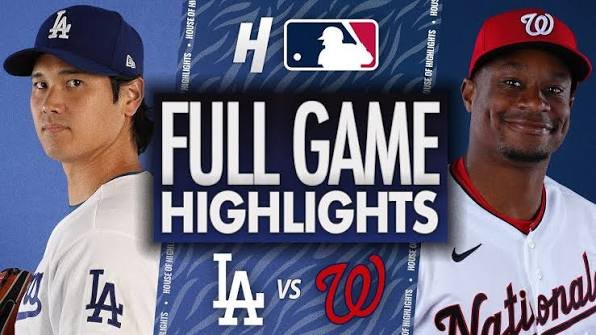
Some baseball matchups feel like a coin flip every time the teams meet. Nationals vs Dodgers has not been one of them lately. The Los Angeles Dodgers walked into 2026 as the standard-bearer for the sport, loaded with star power, deep pockets and a championship pedigree, while the Washington Nationals arrived in the middle of another rebuild, trying to find out which young players would form the next core in the nation’s capital. Over six regular-season games, the gap showed up on the scoreboard every single time. Los Angeles won all six, and the way those wins unfolded tells you plenty about where each franchise stands.
But reducing this matchup to a sweep misses the better story. These two clubs share genuine postseason history, including two memorable five-game October series that swung on late drama and unforgettable swings. They also share a lineage that stretches back to the old Montreal Expos, a connection that gives the matchup a layer of nostalgia that casual fans often overlook. This guide walks through the 2026 season series game by game, revisits the playoff battles, breaks down the players who matter, and looks at what could change the balance of power in the years ahead. Settle in, because there is a lot to unpack.
Why This Matchup Matters More Than the Standings Suggest
On the surface, a series between a contender and a rebuilding club looks like a mismatch, and most of the time that is exactly what it is. The Dodgers have spent the past several seasons assembling one of the most talented rosters baseball has seen, headlined by Shohei Ohtani, Mookie Betts and a supporting cast that would start for almost any other team. The Nationals, meanwhile, have been trying to turn a farm system full of intriguing young players into a competitive major league roster. When those two paths cross, the result is often predictable, but the story around the result is rarely dull.
What keeps Nationals vs Dodgers interesting is the contrast in philosophy. Los Angeles builds through a blend of aggressive free-agent spending, savvy trades and a player development machine that keeps feeding the roster. Washington leans on drafting, patient growth and the hope that high picks mature at the same time. Watching the two approaches collide in the same ballpark is a useful lesson in how modern baseball is constructed, and it gives neutral fans something to chew on even when the box score is lopsided.
There is also a timing element. The 2026 season gave the Nationals several opportunities to measure themselves against the best team in the National League, and those measurements matter for evaluating progress. A rebuilding team does not need to win these games to learn from them, but it does need to look competitive in stretches and show that its young hitters can handle elite pitching. The Dodgers, on the other hand, use series like these to sharpen their depth, test fill-in players and keep their winning habits intact during the long grind of the regular season.
The Shared Roots: From Expos to Nationals

One fun wrinkle in this rivalry is that the Nationals franchise has a long past that predates Washington. Before moving to the capital in 2005, the club was the Montreal Expos, a team that actually met the Dodgers in a famous postseason showdown in 1981. That National League Championship Series, played in a strike-shortened season, ended with Los Angeles advancing after a dramatic late home run that Expos fans in Montreal still refer to by a nickname tied to a Monday in October. It is the kind of heartbreak that sticks around in a franchise’s memory for decades.
That history matters because it gives Nationals vs Dodgers a deeper timeline than most casual observers realize. The relationship did not begin in 2016 or 2019, even though those are the series people remember most vividly. It started with a generation of players who never imagined the team would one day wear a curly W, and it carried through years of mismatched strength and brief moments of equality. Fans who follow the franchise closely often connect the old Expos disappointments with the modern Nationals triumphs, and the Dodgers sit in the middle of that narrative as a recurring obstacle and, in 2019, a defeated foe.
The Dodgers have their own long-standing tradition that makes them a natural measuring stick. Few franchises have as much history, from Brooklyn through Los Angeles, and fewer still have maintained a consistent level of excellence in the modern era. For a team like Washington, facing that kind of institution is both a challenge and a chance to compare the present with the past. It is one reason these games feel bigger than a typical early-season or late-summer series, even when the standings make the outcome look obvious.
The 2016 National League Division Series
The first modern postseason chapter arrived in October 2016, when the Nationals and Dodgers met in the National League Division Series. Washington had won the NL East and was widely viewed as a strong team, while Los Angeles had survived a competitive division race and brought a rotation led by one of the best pitchers of his generation. The series went the distance, and it delivered the kind of tension that makes October baseball so compelling. Every game felt like it could tilt on a single swing or a single mistake.
Game 5 at Nationals Park was the decider, and it went to Los Angeles by a score of 4-3. The Dodgers used a mix of timely hitting and bullpen resourcefulness, and the signature moment came when ace Clayton Kershaw, normally a starter, came out of the bullpen to record the final outs and close the door on Washington. It was a bold managerial decision, and it paid off, sending the Dodgers to the next round and leaving the Nationals with another early playoff exit that fans remembered for a long time. The series also made it clear that the two clubs could produce drama whenever they met in a short format.
The 2016 series left a lasting impression in both cities. For Dodgers fans, it was proof that their team could win a tight, high-pressure series on the road, a theme that would reappear in later playoff runs. For Nationals fans, it was one more reminder of how thin the margins can be in a best-of-five format. Looking back, the series helped set the tone for the rivalry, establishing that Nationals vs Dodgers would be defined by close contests, strategic gambles and the occasional October twist.
The 2019 Rematch and the Grand Slam That Changed Everything
Three years later, the teams met again in the 2019 National League Division Series, and this time the outcome flipped. Washington had entered the playoffs as a wild-card team, fighting its way past Milwaukee in a thrilling one-game showdown, and then took on a Dodgers club that had won over a hundred games. The series swung back and forth, once again ending in a deciding Game 5, but this time at Dodger Stadium. The stage was set for a classic.
The decisive moment came in the tenth inning, when Howie Kendrick launched a grand slam that sent the Nationals to a 7-3 win and a trip to the next round. It is one of the most celebrated swings in franchise history, and it capped a series defined by resilience. Washington rode that momentum through the postseason and eventually won the World Series, the first title in franchise history and the first for a Washington team in decades. For fans of the club, that grand slam is the emotional centerpiece of the entire era.
For the Dodgers, the loss stung badly. They had been favorites, they had the home-field advantage in the deciding game, and they watched a championship-caliber season end in extra innings. The defeat became a talking point about how even the best regular-season teams can be undone by a handful of pitches. It also added fuel to the narrative that Nationals vs Dodgers is a series where the underdog can surprise, a notion that makes the more recent run of Los Angeles dominance feel even more striking by contrast.
A Quick Look at the Playoff History
Seeing the playoff results side by side helps put the rivalry in perspective. The table below summarizes the key October meetings, including the format, the winner and the moment that defined each series. It is a handy reference for anyone trying to understand how the teams have measured up in high-stakes baseball.
| Series | Round | Winner | Result | Defining Moment |
|---|---|---|---|---|
| 1981 | NLCS (Expos vs Dodgers) | Dodgers | 3-2 | Late home run in the decisive game |
| 2016 | NLDS | Dodgers | 3-2 | Kershaw’s relief appearance in Game 5 |
| 2019 | NLDS | Nationals | 3-2 | Howie Kendrick’s 10th-inning grand slam in Game 5 |
Two things stand out. First, every one of these series went the distance, which tells you how evenly matched the teams were when it mattered most. Second, the winner of each series ended up facing enormous expectations in the next round, a reminder that beating a strong opponent in October is only the first test. The Nationals converted their 2019 victory into a championship, while the Dodgers parlayed their 2016 win into a deep run that ended just short of the finish line.
The table also highlights how little separation there has been in playoff settings. While the regular-season results in 2026 were lopsided, history suggests that the October version of this matchup can look completely different. Short series reward timely hitting, bullpen depth and a bit of luck, all of which can narrow the talent gap. It is a point worth remembering whenever someone dismisses the rivalry as a one-sided affair.
The 2026 Season Series: A Six-Game Sweep
Now to the part that gets the headlines. In 2026, the Dodgers swept all six games against the Nationals, adding another chapter to a stretch of dominance. According to Dodger Blue’s recap, Los Angeles won all six games against Washington in 2026 and has taken nine of its last ten head-to-head meetings, dating back to April 9, 2025. That is a remarkable run of success, and it reflects both the Dodgers’ strength and the Nationals’ struggles to find consistency.
The series was split into two three-game sets. The first came in early April at Nationals Park, where the Dodgers took the opener 13-6, followed by a 10-5 win and an 8-6 victory in the finale. The second set came in September at Dodger Stadium, and the games were tighter, with Los Angeles winning 5-3, 6-5 and 7-5. The contrast between the lopsided April results and the narrow September scores suggests that the Nationals improved over the course of the season, even if the final outcomes did not change.
It is worth noting how the Dodgers won. They did not rely on a single overpowering performance; instead, they mixed home runs, timely hitting and strong relief pitching to put games away. They also showed a flair for comebacks, a trait that defined their season. For Washington, the repeated losses were frustrating, but the narrower margins in the second half offered some evidence that the young roster was learning how to compete against elite opposition.
The April Opener at Nationals Park
The first set of games gave Washington fans a rough introduction to the season. The home opener was a Friday afternoon affair, and it started promisingly for the home team, with the Nationals scoring early. But the Dodgers quickly took control, pushing across a five-run third inning and piling on more runs in the middle innings. The final score of 13-6 reflected a game that got away from Washington as the visitors’ offense kept rolling, and starter Michael Soroka was not the pitcher listed, with Emmet Sheehan earning the win and Miles Mikolas taking the loss.
Saturday’s game followed a similar script, with Los Angeles winning 10-5 behind strong pitching from Tyler Glasnow. The Dodgers’ lineup produced sixteen hits, a number that underscores how deep the batting order is. Even the bottom of the lineup posed problems for the Nationals’ pitching staff, which struggled to find outs against a group that could hurt you from top to bottom. Washington did battle late, scoring in the eighth and ninth innings, but the early deficit proved too large.
Sunday brought the closest game of the weekend, an 8-6 Dodgers win. The Nationals got off to a strong start, including a four-run fourth inning, and gave their fans plenty to cheer about. A local newsletter summarized the mood by noting that the team was “rebuilding again,” a succinct description of the franchise’s current phase. The Dodgers eventually pulled ahead, but the finale hinted that the Nationals could stay in games against top-tier opponents when their offense got going.
The September Rematch at Dodger Stadium

When the teams met again in early September, the setting had changed to Los Angeles and the stakes had shifted. By that point, the Dodgers were well on their way to another strong season, while the Nationals were deep in the grind of a difficult year. Washington entered the series with a record of 67-78, while Los Angeles sat at 86-57, a gap that told the story of the standings. The series opener, a 5-3 Dodgers win, set the tone, with Los Angeles holding off a Nationals team that continued to scrap.
The second game was even closer, a 6-5 Dodgers victory that left the Nationals feeling the sting of a missed opportunity. Washington scored five runs but could not quite finish the job, and the loss added to a growing list of narrow defeats. In baseball, a one-run loss often comes down to a single pitch, a defensive misstep or a managerial decision, and the Nationals had plenty of those moments to chew over during the flight home.
The finale on Sunday night produced the most dramatic ending. The Dodgers trailed in the middle innings after Washington scored four in the fourth, but Mookie Betts hit a three-run homer in the eighth to rally Los Angeles to a 7-5 victory. The comeback completed the sweep and underscored the Dodgers’ ability to win games late. For the Nationals, it was another example of how a good effort can slip away in the final innings, and it fed into the bullpen concerns that shadowed the club all season.
Mookie Betts, Shohei Ohtani and the Dodgers’ Star Power
No discussion of the Dodgers is complete without the superstars who headline the roster. Mookie Betts, now a fixture at shortstop, has been one of the most complete players in baseball for years, and his eighth-inning home run in the September finale was a perfect example of his flair for big moments. He combines contact skills, power and defensive versatility in a way few players can match, and his presence gives the lineup a steady backbone regardless of who else is hot.
Shohei Ohtani remains the most extraordinary talent in the game, and his impact on any series is hard to overstate. The Dodgers were without him for part of the September series, but they still won every game, which says a lot about the depth around him. Manager Dave Roberts indicated that Ohtani was expected to return to the lineup soon but unlikely to pitch in 2026, a reminder that managing a two-way star requires patience and careful planning. Even when he is not on the field, his influence shapes how opponents approach the Dodgers’ lineup.
Around those two, the supporting cast provides plenty of firepower. Players like Will Smith and Tommy Edman give the lineup balance, while a deep pitching staff headlined by Tyler Glasnow and bolstered by returning arms such as Bobby Miller offers flexibility. The combination of elite top-end talent and quality depth is what separates the Dodgers from most clubs. For Washington, facing that kind of lineup night after night is a demanding test, and it explains why the results have been so consistent.
The Nationals’ Young Core and Why There Is Reason for Hope
Not every story in this matchup belongs to Los Angeles. The Nationals have assembled a group of young players who give the franchise a credible foundation. James Wood is the centerpiece, a towering outfielder with a rare blend of power and athleticism, and his plate discipline was on display in the September finale when he drew three walks. CJ Abrams, the club’s dynamic middle infielder, homered in that same game and continues to show the speed and pop that make him a threat.
Beyond those two, the supporting group includes players such as Dylan Crews, Brady House, Daylen Lile and catcher Harry Ford, each of whom is trying to establish himself at the major league level. Ford, for instance, reached base three times in the September finale and drove in two runs, a sign that his offensive skills are developing. Veterans and role players like Jacob Young and Andrés Chaparro add experience and depth, helping the lineup stay competitive even when the bigger names have off nights.
Hope in baseball rebuilds comes from small signals, and the Nationals produced several during the Dodgers series. The narrowing margins between April and September, the competitive at-bats against elite pitching and the flashes of power from young hitters all suggest a team in the early stages of growth. It will take time, and the pitching staff will need to develop alongside the hitters, but the pieces are there. If the front office can supplement the core with the right additions, the next Nationals vs Dodgers series could look very different.
Bullpen Troubles and the Blown Save Record
If one issue defined the Nationals’ season, it was the bullpen. According to the September recap, Washington tied the MLB record for most blown saves in a single season with 37. That is a staggering number, and it explains why so many games that looked winnable slipped away in the late innings. Relievers are asked to protect narrow leads, and when they fail again and again, the effect on a team’s record and morale is severe.
The Dodgers were happy to exploit that weakness. Their 41st comeback win of the season came in the finale against Washington, and several of their victories in the series featured late rallies against a shaky relief corps. A lineup as patient and powerful as Los Angeles’s can wear down a bullpen quickly, and the Nationals’ relievers found themselves in tough spots against hitters who rarely chased bad pitches. It was a harsh reminder that pitching depth is just as important as star power in a long season.
Fixing a bullpen is not simple, but it is a priority for any club with ambitions of contending. Teams can invest in veteran arms, develop young pitchers into late-inning roles or use trades to fill gaps. The Nationals will need to choose a strategy and commit to it, because the blown-save record has been a persistent drag on the team’s results. Until that issue improves, close games against strong opponents like the Dodgers will keep slipping through their fingers.
Strategy, Analytics and the Role of the ABS Challenge System
Modern baseball is a game of numbers and adjustments, and this series offered some interesting strategic wrinkles. The Dodgers are known for their data-driven approach, using platoon advantages, defensive positioning and bullpen matchups to squeeze every possible edge from a game. That philosophy showed up in their late-game decision making, where they often deployed pinch hitters and specialized relievers to exploit specific matchups. It is a method that rewards depth, and the Dodgers have plenty of it.
Another new element in 2026 was the automated ball-strike challenge system, which gave hitters, pitchers and catchers the ability to contest certain calls. Early coverage noted that the system was working smoothly and adding an extra layer of excitement, and it has changed how teams think about borderline pitches. Catchers like Harry Ford, who are skilled at framing, have to adapt to a world where challenges can reverse a call, and hitters with strong plate discipline can benefit from the added accountability.
The Nationals are still developing their own analytical identity, and series like this are valuable laboratories. Facing a team that maximizes every advantage forces a young club to sharpen its preparation, from scouting reports to in-game adjustments. As the old saying from broadcasting legend Vin Scully goes, statistics are used much like a lamppost by a drunk, for support rather than illumination, and the best teams know how to use data as a guide without losing sight of the human side of the game. Washington’s task is to find that balance as the roster matures.
The Season Series at a Glance
For readers who like to see everything laid out, the table below summarizes each game of the 2026 season series. It includes the date, the location, the score and the winning pitcher where available, giving you a clean snapshot of how the sweep unfolded.
| Date | Location | Final Score | Notes |
|---|---|---|---|
| April 3 | Nationals Park | Dodgers 13, Nationals 6 | Home opener; Emmet Sheehan earned the win |
| April 4 | Nationals Park | Dodgers 10, Nationals 5 | Tyler Glasnow picked up the win; Dodgers had 16 hits |
| April 5 | Nationals Park | Dodgers 8, Nationals 6 | Nationals scored four in the fourth inning |
| September 4 | Dodger Stadium | Dodgers 5, Nationals 3 | Series opener in Los Angeles |
| September 5 | Dodger Stadium | Dodgers 6, Nationals 5 | One-run game decided late |
| September 6 | Dodger Stadium | Dodgers 7, Nationals 5 | Betts’ three-run homer in the eighth completed the sweep |
The pattern is clear. The first three games produced a combined run differential that favored Los Angeles by more than twenty runs, while the final three were each decided by two runs or fewer. That shift suggests that the Nationals made real progress between spring and early fall, even though the end result remained the same. In a sport where small improvements can compound quickly, that kind of trend is worth noting.
The table also reveals how the Dodgers adjusted to different situations. In April, they used their offense to overwhelm the opposition early, while in September they relied more on late-inning rallies and bullpen execution. That versatility is a hallmark of championship-caliber teams, and it helps explain why Los Angeles has maintained such a lopsided record against Washington over the past two seasons.
What Fans Can Expect From Future Matchups
Looking ahead, the future of Nationals vs Dodgers depends on how both franchises evolve. The Dodgers are positioned to remain a powerhouse, thanks to a mix of elite talent, financial flexibility and a well-oiled development system. They have won recent championships, and their roster is built to compete for several more years. Unless injuries or aging change the equation, they will likely continue to be the favorite in any series against Washington.
The Nationals, on the other hand, have a path to becoming a more serious opponent. If their young core continues to develop, the pitching staff stabilizes and the bullpen improves, the club could emerge as a legitimate contender in the NL East. Their prospects give them upside, and the franchise has shown in the past that it can turn a promising group into a championship team. The 2019 title proves that a wild-card team with the right chemistry can topple a heavily favored opponent.
For fans, the most exciting scenario is a postseason rematch. The history between these clubs suggests that any October meeting would be tense, tactical and potentially unforgettable. Even if the regular-season results remain one-sided for a while, the possibility of another five-game thriller keeps the rivalry alive. That uncertainty is part of the charm, and it is why neutral viewers should keep an eye on both teams as the next season approaches.
Conclusion
When you weigh everything together, Nationals vs Dodgers is a rivalry defined by contrast and context. The Dodgers have dominated recent regular-season meetings, sweeping all six games in 2026 and winning nine of ten dating back to April 2025. The Nationals, meanwhile, have battled through a rebuilding year, a record-tying bullpen struggle and a series of narrow losses that showed flashes of promise.
Yet the long view tells a richer story. These teams have met in memorable playoff series, traded dramatic victories and shared a history that stretches back to the Expos era. The 2016 and 2019 division series produced two classic five-game battles, and the 2019 grand slam remains one of the most celebrated moments in Nationals history. If the current gap closes, the next chapter could be just as thrilling. Until then, fans on both sides have plenty to follow, debate and look forward to.
Frequently Asked Questions About Nationals vs Dodgers
The questions below address the topics that come up most often when people search for this matchup. Each answer is written in plain language so you can find what you need without wading through a wall of statistics. They draw on the games and playoff history covered earlier in this guide.
Whether you are a die-hard follower of one of the clubs or a curious neutral fan, this section should fill in any remaining gaps. Here are the answers to the most common questions.
Who won the 2026 season series between the Nationals and Dodgers?
The Dodgers won the 2026 season series by sweeping all six games. They won three games at Nationals Park in April and three at Dodger Stadium in September, with the closest results coming in the later set, where all three games were decided by two runs or fewer. The sweep extended a stretch in which Los Angeles has won nine of the last ten meetings.
What was the final score of the most recent Nationals vs Dodgers game?
The most recent game in the 2026 series, played on Sunday, September 6, ended with a 7-5 Dodgers victory. Washington led after a four-run fourth inning, but Los Angeles rallied late, capped by a three-run home run from Mookie Betts in the eighth inning. The win completed the sweep and kept the Dodgers firmly ahead in the National League standings.
Have the Nationals ever beaten the Dodgers in the playoffs?
Yes, the Nationals beat the Dodgers in the 2019 National League Division Series, winning the best-of-five series three games to two. The deciding game went extra innings, and Howie Kendrick’s tenth-inning grand slam gave Washington a 7-3 victory. The Nationals went on to win the World Series that year, the first championship in franchise history.
What happened in the 2016 Nationals vs Dodgers series?
The 2016 National League Division Series also went five games, but the Dodgers came out on top. Los Angeles won Game 5 at Nationals Park by a score of 4-3, with ace Clayton Kershaw coming out of the bullpen to finish the game. The result sent the Dodgers to the next round and left Washington searching for its first postseason series victory, which finally arrived three years later.
Why did the Nationals struggle so much against the Dodgers in 2026?
Several factors contributed. The Dodgers have a deep, star-heavy lineup and a strong pitching staff, while the Nationals are in the middle of a rebuild and dealt with significant bullpen problems, including tying the major league record with 37 blown saves. Those late-inning collapses made close games hard to finish, and Nationals vs Dodgers matchups often came down to the final innings, where Los Angeles has been particularly dangerous.
Is there a connection between the Nationals and the old Montreal Expos?
Yes, the Nationals franchise began as the Montreal Expos before relocating to Washington in 2005. The Expos faced the Dodgers in the 1981 National League Championship Series, which Los Angeles won after a late home run in the deciding game. That history gives the modern Nationals vs Dodgers rivalry a longer backstory than many fans realize, linking past heartbreak with the club’s later success.